
November 2025
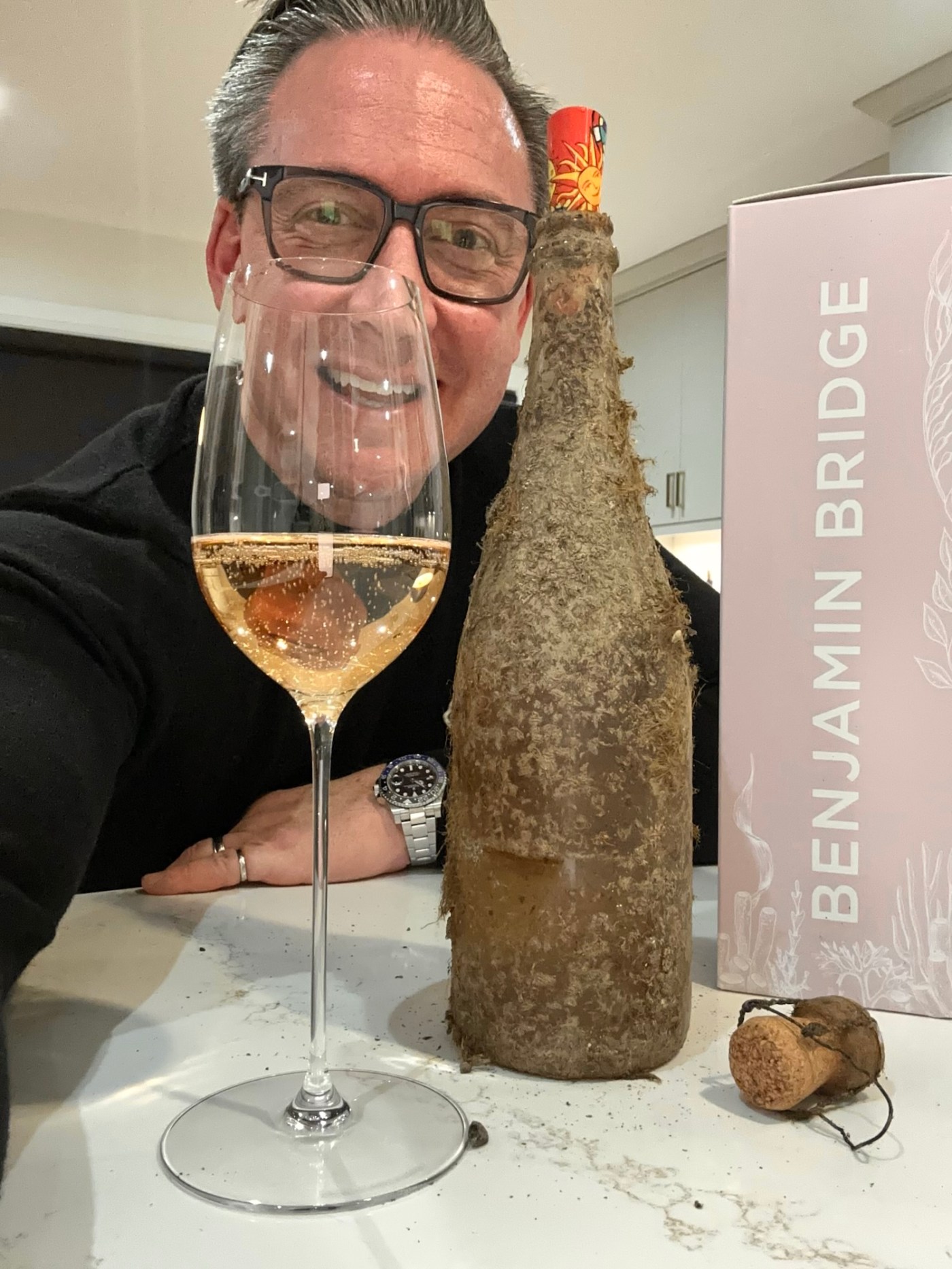
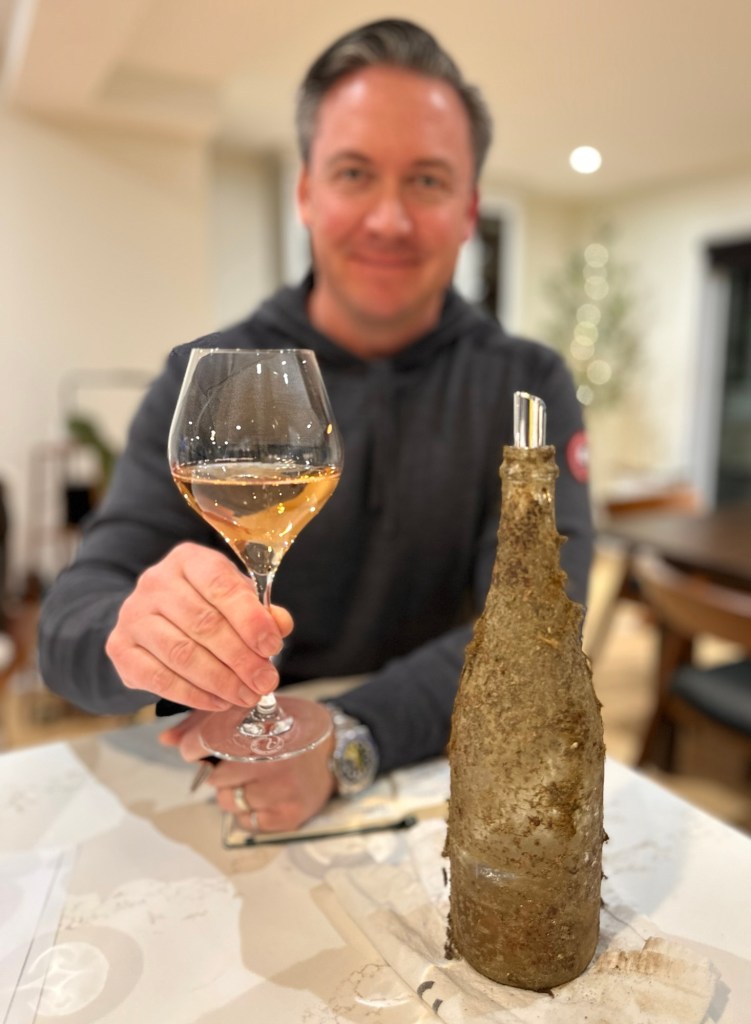
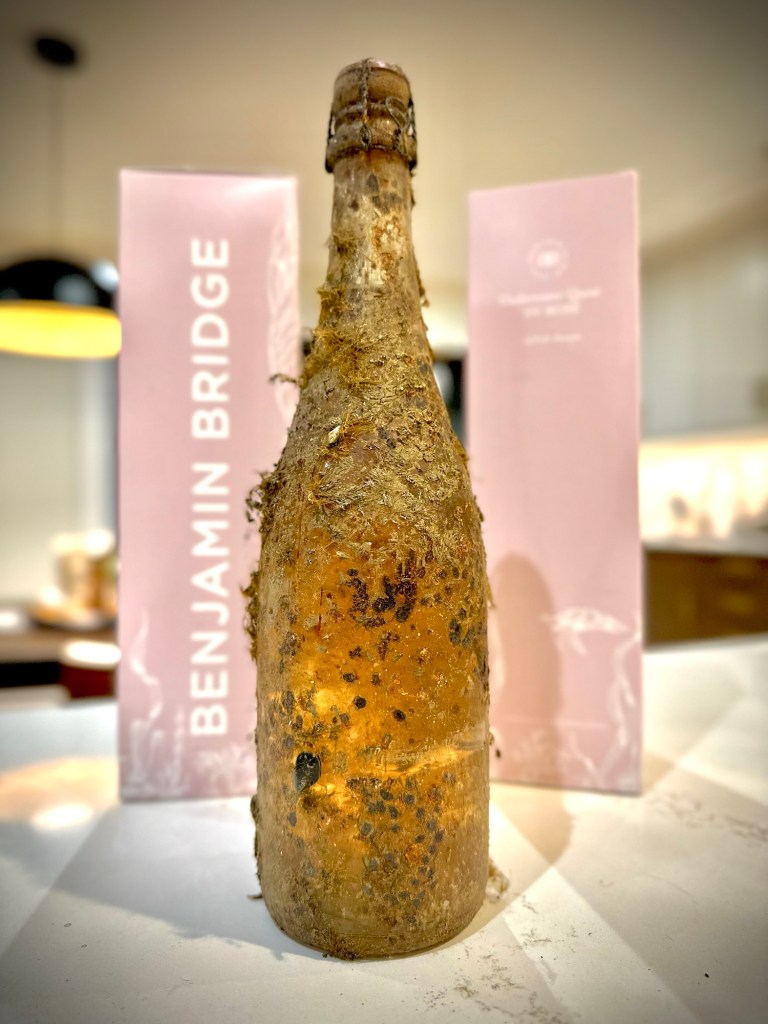
Matt’s review: Brilliantly clear faint pink colour in the glass with remarkably vibrant energy, this cuvée showcases elevated clarity and mousse density, both indicators of meticulous primary vinification and tirage precision. The visual presentation alone suggests that underwater cellaring, with its consistent temperature, static pressure, and darkness, has enhanced preservative conditions while moderating oxidative ingress through the cork.
It opens with a subtle reductive, flinty tension, consistent with oxygen-starved aging environments. Gunflint, struck match, and faint mineral smoke appear first, before giving way to wild strawberry, pink grapefruit peel, and peach skin. Beneath the fruit, crushed seashell, iodine, and chalk-dust notes point to the saline influence of Benjamin Bridge’s terroir along with extended lees contact. The reductive signature is delicate in any event, adding additional aromatic complexity.
On the palate, the mousse is notably fine yet vigorous, with sustained bead and textural drive—likely a result of prolonged cold maturation underwater, which stabilizes CO₂ and promotes slower autolytic development. The acidity is linear, tensile, and Atlantic-etched, while the mid-palate is mineral-driven rather than fruit-saturated, reflecting the maritime terroir and yeast autolysis. Structure carries the wine rather than weight, allowing saline, oyster-shell notes to persist through the finish.
Upon opening, the reductive flintiness is more pronounced; however, after several hours of air contact—and particularly noticeable on day two—these floral and maritime mineral tones become more integrated. The struck-match character evolves into finer wet-stone minerality, and the fruit becomes more expressive, indicating that the oxygen-deprived aging conditions suppressed early aromatic release but preserved remarkable energy, tension, and longevity in glass.
This is a compelling sensory example demonstrating that underwater cellaring is not merely theatrical but, when executed with precision, can serve as a legitimate élevage method, influencing structural tension, mousse density, aromatic restraint, and preservation of freshness. Excellent now, but also a prime candidate for medium-term evolution under cork. Enjoy 2025-2035. Tasted November 2025. 94+ points. Matt Steeves – http://www.quercusvino.ca
available (occasionally while quantities last) here

Discover more from Quercus Vino
Subscribe to get the latest posts sent to your email.
 Quercus Vino
Leave a comment