

December 4th, 2025
As featured on CFRA News Talk Radio with Sommelier Matt Steeves
🍷 Wine Myths Uncorked: 5 Wines That Prove What Really Matters
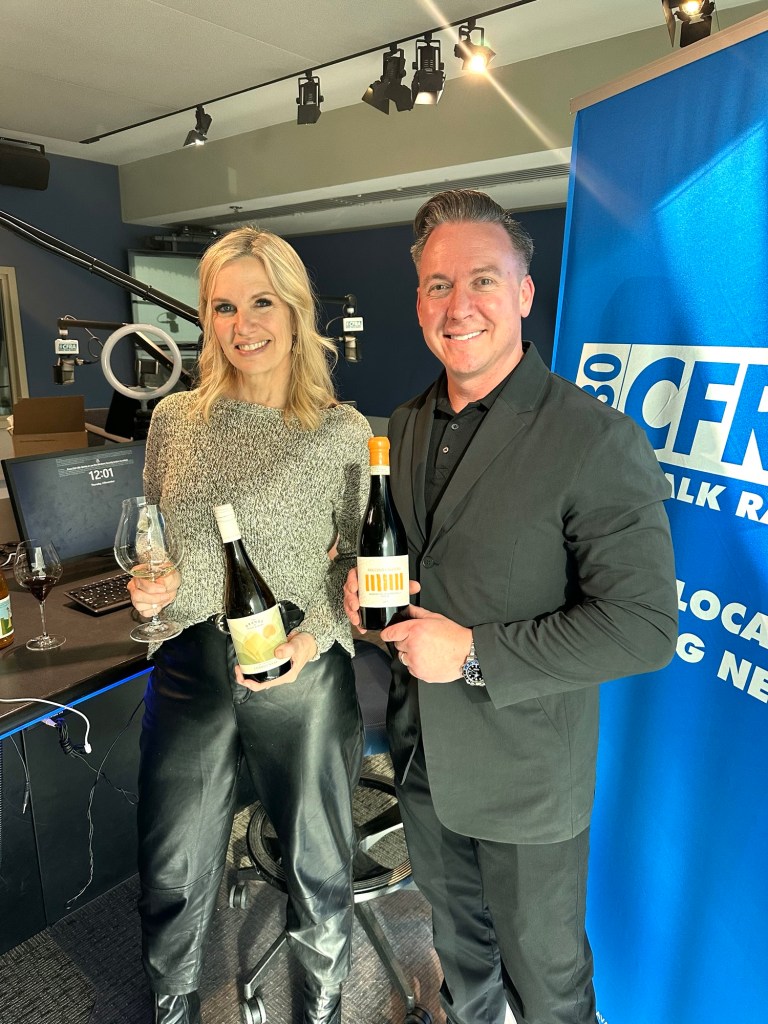
Wine shouldn’t feel intimidating — it should be enjoyable, expressive, and accessible to everyone. Yet myths persist about how wine should be sealed, served, stored, or selected. To help cut through that noise, I recently joined Patricia Boal on CFRA News Talk Radio 580 to debunk some of the most common misconceptions using seven wonderful wines from Canada, Portugal and Italy.
Each wine highlighted a different myth, and each proved it wrong in the most delicious way.
🧃 Myth 1: “You need a cork for a wine to be high quality.”
Wine Showcase: Leaning Post The Fifty Chardonnay – $25.95 at LCBO, Lincoln Lakeshore VQA (Niagara), ON
Think screw caps signal inexpensive wine? Think again. Like these beautifully crafted wines from PEC, Niagara, and Portgual – they’re sealed under a twist cap—not as a shortcut, but as a deliberate choice to protect freshness and aromatic purity.
For decades, natural cork closures posed one of the greatest risks to wine quality. As recently as the early 2000s, up to 1 in 10 bottles were affected by cork taint, caused by contamination (often 2,4,6-TCA) that results in dull, musty aromas reminiscent of wet cardboard or a damp basement. When a corked bottle is opened, the wine is already damaged—flawed from the moment the tainted cork was inserted.
With the invention of the modern screw cap (Stelvin closure), winemakers finally had a solution. New Zealand and Australia were among the first premium regions to adopt screw caps across nearly all wines, including top-rated Rieslings and Syrahs. Today, many high-quality producers in Niagara, British Columbia, Oregon, and parts of Italy and France use screw caps to ensure consistency and eliminate this longstanding risk.
So, don’t be misled: a screw cap is often a sign of precision, not cost-cutting. It’s chosen to guarantee freshness, enhance longevity, and protect the purity of the wine inside.y, and protect the purity of the wine inside.
✔ What matters is in the glass—not on the closure.
Leaning Post The Fifty Chardonnay – $25.95 at LCBO
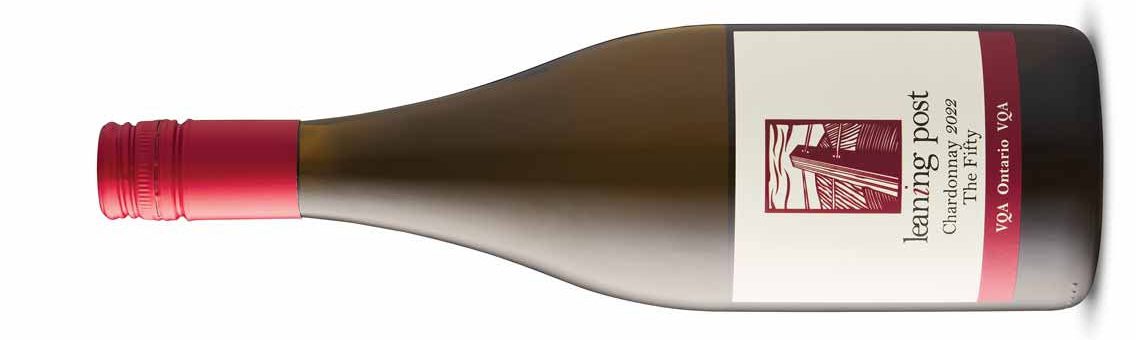
The 2022 vintage was beautiful, warm and sunny throughout, but with very small yields. As a result, wines are very concentrated with great acidity. The nose of this wine is full of pineapple, nectarine, red apple, and orange blossom followed up with lemon meringue and crème fraiche. The palate has a refreshing reflection of the nose, adding lemon-curd, peach blossom, and spice, but it also showcases a mineral and wet stone characteristic that leads to the long, elegant finish. This wine will age well for the next 5-8 years. Enjoy with brie, sole meuniere, and lemon-roasted chicken.
The Grange of Prince Edward County Victoria Block Chardonnay – $30
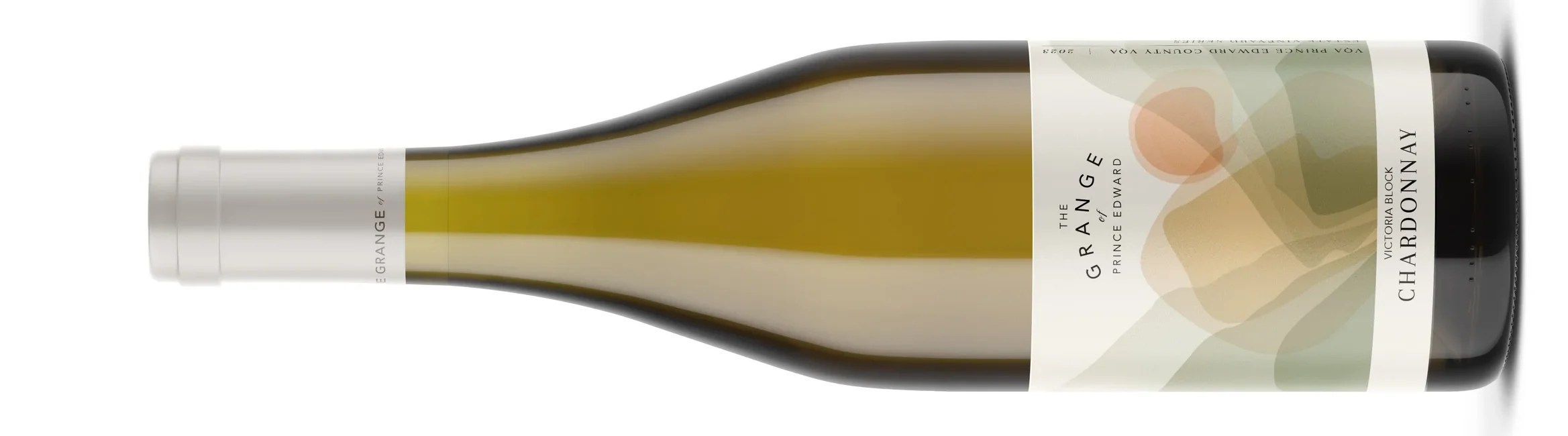
Made with estate grapes from our Victoria block, this nuanced Chardonnay shows great typicity of the region. Displaying laser focused minerality, notes of sweet juicy Pomelo citrus fruit, fresh baked lemon pound cake, and sweet bright caramel apple, the wine boasts a voluptuous palate with a soft rich body, fresh acidity, and a persistent finish.
With ‘The Grange’ now under the direction of winemaker Jonas Newman from neighbouring Hinterland, there is new luster to the wines of this historic property. This is a brilliant, detailed County chardonnay. It has a classic, almost Burgundian nose of hazelnut, peach/pear custard, toast and nutmeg. It is light to medium bodied, bright, elegant and lively. Just a touch sweeter than need be, but so well formed, with excellent focus and length. Tasted often Fall 2024. Score – 91. (David Lawrason, winealign.com)
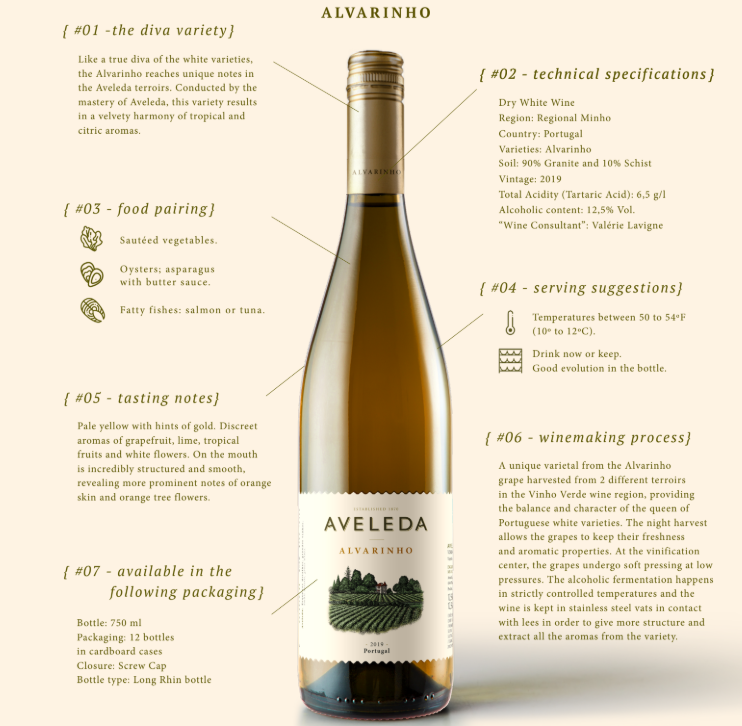
Aveleda Alvarinho 2024 – $15.95
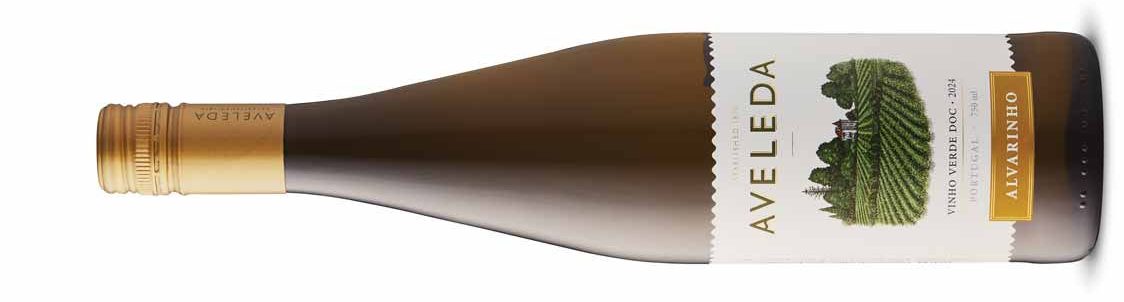
This varietal Alvarinho is delicately floral with bright, crisp acidity and subtle citrus fruit. Chill and sip with soft, creamy cheeses, green salads, or flatbread topped with olive oil, arugula and ricotta.
Clear and citrine in color with golden hints. | Aroma: Intense and balanced aroma with delicate notes of grapefruit, orange leaf and white flowers. | Taste: With balanced acidity, combining elegance and freshness, it ends with a firm and persistent finish. Notes of white fruit, orange peel, pineapple and orange blossom.
Appetizers: oysters and asparagus with butter sauce.
👑 Myth 2: “Price doesn’t matter — expensive wines are just hype.”
➤ Wine Showcase: Roccolo Callisto Amarone della Valpolicella DOCG 2017 – $89.95
While price alone doesn’t guarantee quality, certain wines, especially heritage styles like Amarone, Barolo, and Champagne, typically come with a higher price tag for good reason. These wines are inherently time-iWhile price alone doesn’t guarantee quality, certain wines, especially heritage styles like Amarone, Barolo, and Champagne, typically come with a higher price tag for good reason. These wines are inherently time-intensive, labour-demanding, and require extended aging before release. It’s common for them to take 4 to 10 years from harvest to market, representing a long-term investment in both craftsmanship and cellar space.
These iconic wine styles often start around $40+ because:
- Grapes are hand-harvested, frequently from low-yielding hillside vineyards.
- Amarone grapes undergo 3–6 months of natural drying (appassimento), requiring 2x more fruit to produce one bottle due to the withered ‘raisins’.
- Barolo must age a minimum of 38 months before release (Riserva often 62+ months).
- Vintage Champagne requires a minimum 3 years of secondary fermentation/aging on its lees before disgorgement. Many Champagne producers often age their vitage and prestige cuvées for much longer, sometimes five to ten years or more, to develop greater complexity.
- Storage, oak maturation, and long-term climate control all add significantly to costs.
In short, you’re not paying for hype—you’re paying for years of meticulous work, exceptional fruit, and uncompromising quality.
✔ Between $40 and $100, many wines offer a notable step-up in concentration, complexity, balance, and longevity. In today’s globally competitive market, premium wines are priced fairly—you genuinely get what you pay for.
Amarone is living proof that sometimes you really do get what you pay for, like this 2017 Amarone from Roccolo Callisto.
Roccolo Callisto is a small, quality-driven estate crafting deeply traditional Amarone in the hillsides of Vendri and Parona, two valleys known for producing concentrated, expressive fruit. Their approach is rooted in heritage: pergola-trained vines averaging 40 years of age, meticulous hand harvesting, and the classic appassimento process carried out in the estate’s fruttaio for approximately 90 days.
Production is intentionally tiny—only 1,500 bottles of Amarone are made—allowing for absolute control from vineyard to cellar. Vinification is slow and deliberate: extended cold maceration, a month-long fermentation, and a rare 15-day post-fermentation maceration to draw out depth and texture. The wine then spends a remarkable 48 months in large Slavonian oak botti, followed by additional bottle aging, ensuring a fully integrated and authentically old-world expression.
Roccolo Callisto is a producer that leans proudly into tradition: purity of fruit, transparency of terroir, and a style that honours the soulful, savoury, contemplative side of Amarone.
Wine Review: Roccolo Callisto Amarone della Valpolicella DOCG 2017
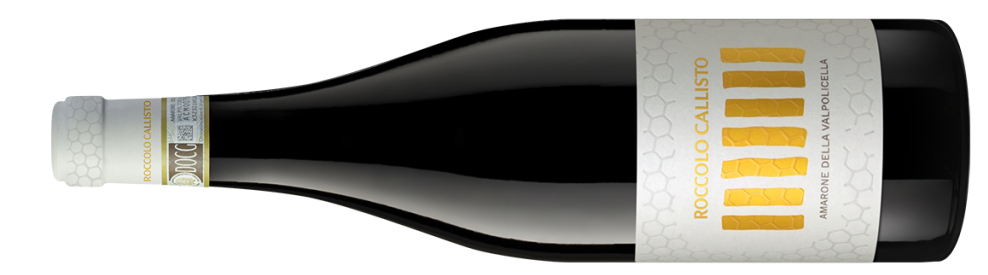
The 2017 Amarone from Roccolo Callisto is a beautiful example of artisanal Valpolicella craftsmanship—a wine shaped by patience, tradition, and meticulous detail. Deep ruby red with light garnet reflections, showing its graceful evolution. Fragrant and inviting, it opens with plum, red cherries, and dried dark fruits, layered with tobacco leaf, leather, balsamic herbs, and warm spice. There’s an earthy, old-school authenticity here—a nod to Amarone’s historic roots. Full-bodied yet remarkably fresh and elegant, the palate mirrors the aromatics: dark fruit, dried fruit, sweet spices, chocolate, and savoury herbal notes moving seamlessly across the mid-palate. The velvety tannins and lively acidity create a refined tension, leading into a long, balanced finish with lingering spice and a subtle savoury edge.An impressive, slightly aged Amarone that shows both depth and finesse. Traditional in character, elegant in execution, and drinking beautifully today with two decades of life ahead. Tasted December 2025. 94 points — Matt Steeves, QuercusVino.ca
🌡 Myth 3: “Niagara’s cool climate can’t produce full-bodied red wines.”
➤ Wine Showcase: Ultra-Premium Niagara Merlot from Kirby Estate (2020 Signature Merlot)
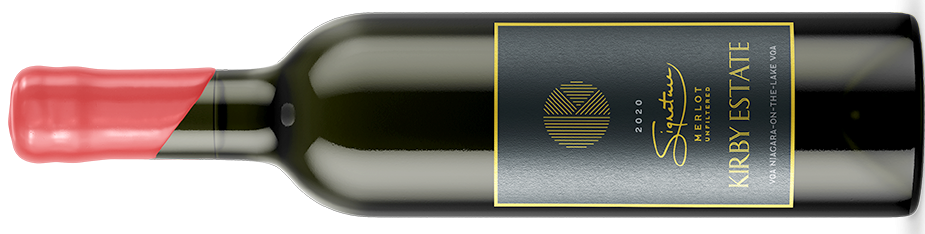
While Niagara is renowned for their world-class cool-climate Chardonnay, Riesling, and Pinot Noir, it’s often assumed that Niagara is too cool to fully ripen big, bold red grapes. This Merlot proves otherwise.
Niagara’s climate is classified as cool-climate, yet its growing degree days (GDD) tell a story of capability rather than constraint.
- Niagara-on-the-Lake typically accumulates 1,350–1,500 GDD (°C) annually.
- This range is similar to Pomerol, Bordeaux, home to Chateau Petrus—often the most expensive Merlot-based wine in the world, with iconic vintages selling for tens of thousands of dollars per bottle.
Niagara benefits from a longer, slower ripening season thanks to Lake Ontario, allowing grapes to reach full maturity well into late October or early November. This gradual ripening maintains vibrant acidity—something often lost in hotter regions where sugars rise rapidly before phenolic ripeness is achieved.
Through low-yield viticulture, canopy precision, and strategic harvest decisions, local producers are crafting Merlots with impressive structure and depth—showcasing that cool-climate wines, when intentionally grown, can rival world-class examples from warmer regions.
✔ Cool-climate wines can deliver depth, richness, and balance—when grown with intent.
✔ Niagara offers power with precision— Kirby Estate’s Signature Merlot is proof.
My review of the Kirby Estate 2020 Signature Merlot: Nestled in Niagara-on-the-Lake, Kirby Estate is positioning itself among Canada’s top-tier producers. Proprietors Scott and Maria Kirby have spared no effort in showcasing the full potential of their distinctive K-shaped estate vineyards (as depicted on their label). Supported by renowned viticulturalist Craig Wismer and winemaker Matt Smith, their philosophy is clear: precision farming, meticulous selection, and an uncompromising pursuit of quality.
The 2020 Signature Merlot represents the pinnacle of their craft. Sourced from 18-year-old vines planted in sandy loam soils, the grapes were handpicked in two lots (October 24 and November 7) at 23+ and 25+ brix, highlighting both patience and confidence in the growing season. After cold soaking, wild yeast fermentation, and 20 months in French oak (new and neutral), the wine was bottled unfiltered in July 2022 at 15.7% ABV. This alone speaks volumes about the exceptional ripening achieved in this cool-climate region.
Signature Merlot 2020 is a deep ruby colour with a subtle garnet rim. Fragrant and layered, offering sweet plum, blackberry, blueberry pie, cassis, and dark cherry, supported by savoury herbs, graphite, and crushed stone. A vibrant expression of both vintage ripeness and vineyard precision. Silky and powerful with exceptional texture. Velvety tannins frame concentrated dark fruit and spice, gradually unfolding into a long, graceful finish. Despite its 15.7% power, the wine remains refreshing and balanced, with cool-climate acidity adding lift and elegance to the full-bodied intensity.
A defining expression of Niagara Merlot: rich, structured, and beautifully composed, capturing remarkable ripeness while staying true to its origin. The 2020 Signature Merlot is a testament to what can be achieved when ambition, talent, and terroir align. The finest Niagara Merlot I’ve tasted. Enjoy now with a 2 hour decant or cellar and enjoy over the next 15–20 years. Tasted November 2025. 96 points. Matt Steeves – www.quercusvino.ca – Available winery-direct $108
🌊 Myth 4: “Where you store wine doesn’t really matter.”
➤ Wine Showcase: Benjamin Bridge Underwater Quest NV Rosé (Traditional Method Sparkling Wine, aged in the saltwater off the coast of Nova Scotia)
This innovative wine was aged in the Atlantic Ocean—an extreme example of arguably optimal wine storage conditions. Beneath the waves, it benefited from constant cool temperatures, complete darkness, and consistent pressure. While you don’t need an ocean cellar at home, the experiment brilliantly illustrates what wine needs to age gracefully.
At home, many wines suffer from the opposite conditions. Bottles are frequently stored:
- Above refrigerators, where warm air accumulates
- Beside stoves, radiators, or heat vents, exposing them to temperature spikes
- In sunlit kitchen windows, where direct light strikes the bottle daily
Exposure to heat and UV light accelerates chemical reactions, causing premature ageing, oxidation, and loss of freshness. Think of it like leaving fruit on a sunny windowsill—the bruising, deterioration, and dulling of flavour come quickly and permanently. Even short periods in improper storage can compromise quality before the wine is ever opened.
✔ Wine is best kept cool, dark, and undisturbed.
✔ A mild basement, interior closet, or wine fridge (set no lower than 10–12°C) is ideal.
✔ Avoid heat, light, and vibration—the three biggest enemies of wine.
Pro Tip: If you wouldn’t store gourmet chocolate there, don’t store wine there!
This underwater-aged wine is a dramatic reminder that environment matters. Whether in ocean depths or a home pantry, the right storage can preserve elegance, longevity, and expression.
Benjamin Bridge NV Rosé Brut – Underwater Quest
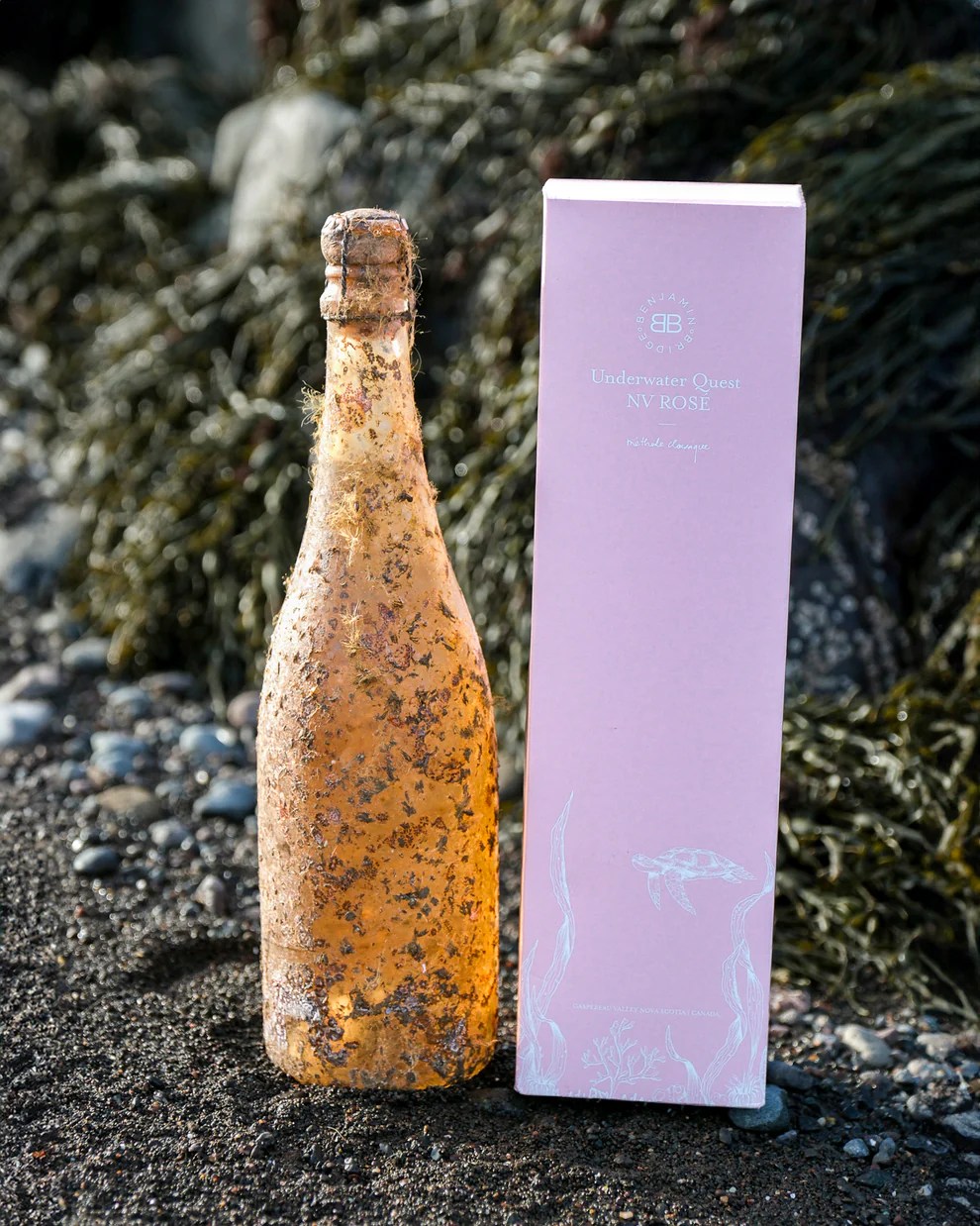
Inspired by the extraordinary preservation of centuries-old Champagne bottles discovered in Baltic Sea shipwrecks—still remarkably fresh after up to 200 years beneath the waves—Benjamin Bridge embarked on a daring experiment rooted in history, innovation, and curiosity. True to their pioneering spirit in sparkling winemaking, the team initiated an underwater aging project to explore whether the dark, cold seabed could serve as nature’s most unique cellar.
Fully aware of the risk of losing the entire production, they proceeded—motivated by a drive to push boundaries and supported by a gregarious winemaking team and local fishers who embraced the vision.
Earlier this year, Benjamin Bridge submerged several cages of their non-vintage Brut Rosé—a precise and exceptional traditional-method sparkling crafted from Chardonnay and Pinot Noir—off Nova Scotia’s rugged Eastern Shore. Months spent beneath shifting tides and among vibrant marine life led to the bottles resurfacing intact, naturally adorned by the sea and enriched by their underwater journey.
This unconventional storage represents the antithesis of how many wines are unfortunately kept. Where these bottles experienced constant cool temperatures, total darkness, and minimal disturbance, countless wines in homes are left sitting on top of fridges, beside stoves, near heaters, or in sunlit areas for days, weeks, even months. Such exposure to heat and light accelerates oxidation and degradation—some of the most damaging influences on wine. Instead, wines should be stored in cool, dark, stable environments, such as basement pantries or closets, or ideally in a temperature-controlled (but not overly cold) beverage fridge.
🍊 Bonus Myth: “Orange wine is made from oranges.”
➤ Wine Showcase: Therianthropy Mouflon Viognier/Marsanne/Chardonnay Orange Wine (2021)
Orange wine has nothing to do with citrus—it takes its name from its amber-orange hue, which comes from the way it’s made. Technically known as a skin-fermented white, this style involves white grapes being fermented with their skins, just like red wine production. This technique extracts additional tannins, aromatics, colour, and texture, resulting in a more layered and expressive wine.
In Ontario, under VQA guidelines, a wine labelled as “Skin-Fermented White (Orange Wine)” must:
- Use 100% white grapes, and
- Remain in continuous skin contact for a minimum of 10 days during fermentation (some producers go far beyond this).
- These wines may range from pale gold to deep amber in colour, depending on grape variety, length of maceration, and oxidation influence.
Therianthropy’s Mouflon Orange Wine is a prime example—crafted from Viognier, Marsanne, and Chardonnay, fermented on skins to reveal notes of tea leaf, apricot, wild herbs, and savoury minerality with that hallmark tactile grip.

🍷 Final Sip
Wine doesn’t have to be complicated to be extraordinary. Serve it properly, store it wisely, and stay open to discovery. Whether it’s a twist-top white, a powerful cool-climate red, sea-aged sparkling, or an iconic style like Amarone — the key is curiosity, not conformity. Afterall, wine is meant to be experienced, not overcomplicated.
👉 The best bottle isn’t determined by price, closure, or origin—it’s the one you enjoy, explore, and share.
Cheers,
Matt Steeves, Sommelier
QuercusVino.ca | @QuercusVino
Make a one-time donation
Make a monthly donation
Make a yearly donation
Choose an amount
Or enter a custom amount
Your contribution is appreciated.
Your contribution is appreciated.
Your contribution is appreciated.
DonateDonate monthlyDonate yearlyDiscover more from Quercus Vino
Subscribe to get the latest posts sent to your email.
 Quercus Vino
Leave a comment