Friulano: The Grape at the Heart of Collio DOC
That intersection between history and evolution helps explain why Friulano was such an appropriate subject for the first Collio Evolution. The Consorzio deliberately framed the inaugural edition around the past, present and future of Friulano, with subsequent editions intended to place different Collio varieties in the spotlight. That framing seems particularly appropriate because Collio itself continues to evolve. There are grapes that belong to a place because they are widely planted. Others become inseparable from a region because, over generations, they come to express something deeper about its landscape, traditions and people. In Collio, that grape is Friulano. Friulano may not be indigenous to Collio in the strict ampelographic sense, but few grapes are more culturally indigenous to a place. Over generations, it has become woven into the identity of Collio: grown across its hillsides, poured in local osterie, embraced by many of the denomination’s leading estates and interpreted in styles ranging from bright and immediately approachable to concentrated, site-specific wines capable of developing beautifully for well over a decade. The Consorzio Tutela Vini Collio describes Friulano as a wine of tradition and a symbol of the denomination’s identity and history. Today it represents approximately 15% of Collio production, although its importance to the region extends far beyond those numbers. That made it an obvious choice to take centre stage at the inaugural Collio Evolution, held October 26 and 27, 2025. The new annual event was conceived as an exploration of the past, present and future of Collio, with a different grape variety taking the spotlight each year. For its first edition, organizers chose Friulano, the Consorzio calling it the wine of tradition and one of the most representative symbols of Collio’s identity and history. It was a fitting choice because understanding Friulano is, in many ways, essential to understanding Collio itself. Different producers are exploring different interpretations of Friulano. Some favour exceptionally clean, precise and mineral expressions. Others pursue longer lees ageing or greater textural development. Some employ skin contact, as seen in wines such as Picech’s Athena. Others continue to work within more traditional interpretations of the variety. Friulano also remains important within the broader language of Collio Bianco, where it can interact with varieties such as Ribolla Gialla and Malvasia Istriana. Yet none of these developments requires abandoning tradition. That is perhaps the larger message behind Friulano today. The grape has already survived changing borders, political regimes, winemaking fashions and even the loss of the name by which generations knew it. Its historical origins may be more complicated than the word “indigenous” sometimes implies, but after generations in these hills its connection to Collio is no longer merely agricultural. It is cultural. And that is why Friulano can feel so completely native to Collio even when its ampelographic history tells a more complicated story. The older wines at Collio Evolution added another important dimension to that relationship. They demonstrated that Friulano is not simply capable of representing Collio when young. Given time, it can reveal another side entirely, more savoury, textural, complex and contemplative, yet still recognizably connected to the grape and the hills from which it came. From a fresh young Friulano poured alongside the foods of Friuli to a single-vineyard wine still thriving thirteen years after harvest, the variety occupies an unusually broad spectrum. It can be familiar and profound at the same time. Choosing it to launch Collio Evolution therefore felt less like selecting the first grape in a rotating series than making a statement about what Collio considers important. Before looking toward the future, start with the variety that has helped define the region’s past. Start with Friulano. Cheers!

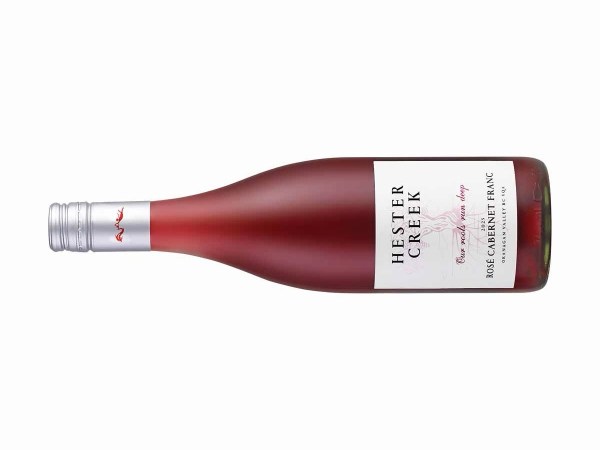
92 point wine review: Hester Creek Cabernet Franc Rosé, Okanagan Valley, BC

The 2025 Rosé, made from 100% Cabernet Franc, is beautifully expressive, bursting from the glass with ripe raspberry, wild strawberry and fresh rhubarb, alongside an especially enticing raspberry-scone character and hints of strawberry-rhubarb pie. There is lovely purity and generosity to the fruit on the nose. The palate is creamy with more body and texture than many Provençal-inspired rosés, yet it remains wonderfully refreshing. Raspberry and strawberry carry through alongside tart rhubarb, pomegranate and a subtle hint of spice. The wine has a lovely sense of roundness and generosity through the mid-palate, balanced by enough freshness to keep everything lively and composed. That extra dimension of body makes this an exceptionally versatile rosé at the table. Try it with wood-fired pizza, grilled pork with cherry compote, an artisanal charcuterie platter with fruit preserves, or fennel salami and creamy blue cheese. A fantastic option to enjoy alongside Thanksgiving dinners, where its combination of red fruit, freshness and texture will play beautifully with turkey, stuffing and cranberry sauce. A polished, expressive and highly versatile rosé from an estate that continues to offer not only excellent wines, but one of the Okanagan Valley’s most complete wine-country experiences. Look for it at LCBO in September or winery-direct throughout the year. Tasted September 2026. 92 points. Matt Steeves - http://www.quercusvino.ca

Amarone 2021: Valpolicella’s Living Culture and the Standout Wines of the Vintage

The 2021 vintage does not present a single, uniform style. There are traditional and firmly tannic expressions, fragrant wines filled with regional herbs and red fruit, and darker examples built around dried dark fruits, graphite and balsamic complexity. The best share a more important quality: proportion. Fruit concentration is matched by freshness. Alcohol is present but rarely becomes the wine’s sole defining feature. Appassimento adds depth without consistently pushing the wines into heaviness. Even among the most powerful examples, the more successful producers have preserved movement, aromatic clarity and a sense that the wines will continue to evolve rather than merely soften. Seen through the six symbols of the masterclass, 2021 becomes more than another Amarone release. It demonstrates how vineyard architecture, grape selection, drying conditions, fermentation, maturation and inherited cultural knowledge all contribute to the finished wine. Valpolicella is no longer most accurately explained through simple oppositions: power versus elegance, tradition versus modernity, or technique versus terroir. Its identity lies in the relationships between its wines and in the decisions, rituals and accumulated wisdom connecting them. The 2021 Amarone vintage shows that concentration and elegance need not be opposites. When every stage is handled with precision and restraint, each can make the other more compelling. Full details at http://www.quercusvino.ca #Amarone #Anteprima #Valpolicella #Italy #Sommelier #Wine #TopRated #MustTry #WineAficionado #Verona #AmaronePreview #Cellarworthy #Backupthetruck #Winetime #2021Amarone #Corvina #LakeGarda #OperaPrima #Anteprima #WineCollecting #Cellaring #Consorzio

Etna: Sicily’s Paradox of Fire and Freshness

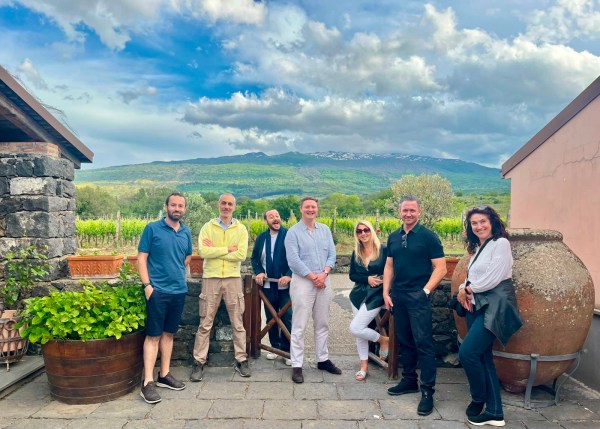
High on the slopes of Mount Etna, Mediterranean sunshine, mountain elevation, ancient vines and successive layers of volcanic lava converge to produce some of Italy’s most distinctive wines. Exploring Etna during Sicilia en Primeur, I discovered the remarkable diversity of Nerello Mascalese and Carricante, the increasingly precise expression of individual contrade, and an appellation whose quality now extends far beyond a handful of celebrated producers. Etna’s wines may be born from fire, but they are defined by freshness, elegance and an extraordinary sense of place.

World-Class Canadian Wines for Canada Day – As aired on CTV and CFRA – June 19, 2026

Today on CTV Your Morning (and later on CFRA News Talk 580), Sommelier Matt Steeves was presenting some of his top-rated Canadian wines from across the country with special focus on regions such as Prince Edward County, Niagara, and British Columbia’s Okanagan Valley, where wineries are producing wines with freshness, balance, elegance, complexity, and a true sense of place. These are the qualities that define many of the world’s greatest wines, and they are increasingly the qualities wine enthusiasts associate with Canadian wine. These wines highlight why Canada is now recognized as one of the most exciting cool-climate wine-producing countries in the world. The story of Canadian wine in 2026 is no longer about potential. It is about achievement. Ontario and British Columbia have become Canada’s superpowers for world-class wine, but the broader message extends across the country. Canadian wineries are producing wines that are refreshing, balanced, complex, food-friendly, age-worthy, and increasingly sought after by wine enthusiasts across Canada and around the world. From traditional method sparkling wine and elegant Chardonnay to expressive Pinot Noir, distinctive whites, and powerful red blends, Canadian wine has never been better. This Canada Day, support local. Drink Canadian. Explore the wines being produced in our own backyard. And discover why the world is paying more attention to what Canada is putting in the glass.

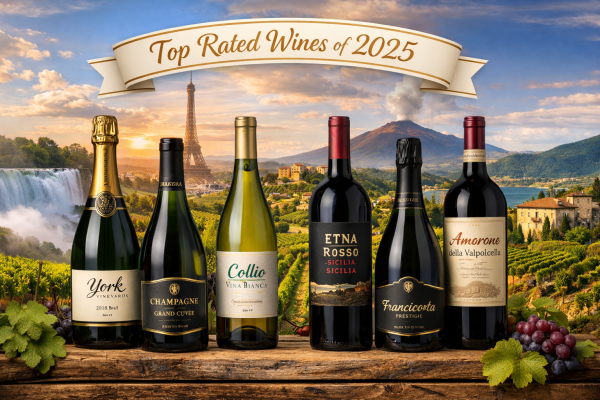
Sommelier Matt Steeves’ Top Rated Wines of 2025

Each year, a small handful of wines rise unmistakably above the rest—bottles that don’t simply impress, but define what greatness looks like in their place of origin. The top-rated wines I tasted this year from Canada, Champagne, and across Italy represent the absolute pinnacle of craftsmanship, terroir expression, and ambition. These are wines made without compromise, where precision meets emotion, and regional identity is expressed with clarity and confidence. From cool-climate Canadian vineyards delivering finesse and mineral tension, to the timeless brilliance of Champagne, and the profound depth and heritage found throughout Italy’s greatest appellations, these selections stand shoulder-to-shoulder with the world’s finest. Together, they tell a compelling story of what is possible when vision, site, and skill align—wines that proudly showcase the extraordinary heights their regions can achieve on the global stage.

Wine Myths as discussed on CFRA News Talk Radio December 4th, 2025

Wine shouldn’t feel intimidating — it should be enjoyable, expressive, and accessible to everyone. Yet myths persist about how wine should be sealed, served, stored, or selected. To help cut through that noise, I recently joined Patricia Boal on CFRA News Talk Radio 580 to debunk some of the most common misconceptions using seven wonderful wines from Canada, Portugal and Italy.

Wine Myths as seen on CTV Your Morning

Wine shouldn’t feel intimidating — it should be enjoyable, expressive, and accessible to everyone. Yet myths persist about how wine should be sealed, served, stored, or selected. To help cut through that noise, I recently joined CTV Your Morning to debunk some of the most common misconceptions using five wonderful wines from Canada and Italy. Each wine highlighted a different myth, and each proved it wrong in the most delicious way. Wine doesn’t have to be complicated to be extraordinary. Serve it properly, store it wisely, and stay open to discovery. Whether it’s a twist-top white, a powerful cool-climate red, sea-aged sparkling, or an iconic style like Amarone — the key is curiosity, not conformity. Afterall, wine is meant to be experienced, not overcomplicated. So remember, the best bottle isn’t determined by price, closure, or origin—it’s the one you enjoy, explore, and share.

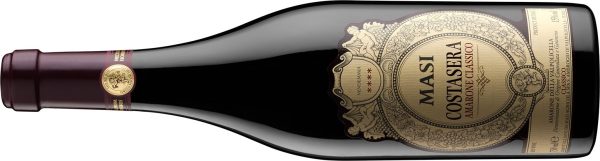
wine review: Masi Costasera Amarone Classico DOCG 2020

Founded in 1772, and now guided by the seventh generation of the Boscaini family, Masi has spent nearly 250 years shaping the voice of Amarone—rooted in heritage, guided by innovation, and always deeply connected to the land. Their flagship Costasera Amarone is grown on hillside vineyards spanning the historic communes of Marano, Negrar, Sant’Ambrogio, and San Pietro in Cariano—the very cradle of the Valpolicella Classico zone, where many of the region’s finest Amarone wines are produced each year. These west and southwest-facing slopes soak up the final warmth of the day, while Lake Garda’s cooling breezes preserve the wine’s natural lift and finesse—a hallmark of Classico Amarone, which tends to show more vibrancy and freshness compared to its warmer eastern counterparts. The soils here contain red limestone and cretaceous marl, rich in calcium carbonate, which add a mineral tension and elegance that complements the naturally rich dried fruit character found in many Amarone wines. From these noble slopes, Masi cultivates Corvina, Rondinella, and Molinara, grapes that are slowly dried after harvest using the traditional appassimento method. The result is a wine style that balances intensity with elegance, approachable in its youth, yet structured for cellaring. I recently tasted the 2020 vintage of Costasera, now widely available at LCBO stores across Ontario, just in time for the holidays, when Amarone becomes one of the season’s most sought-after wines for both gifting and fireside enjoyment. In the glass, it’s deep, dense, and inviting, with expressive aromas of dark cherry, wild berries, and dried plum, layered with dark chocolate, balsamic herbs, graphite, and a subtle earthiness that nods to its hillside origins. The palate delivers a full-bodied, plush mouthfeel, lifted by bright acidity and fine, integrated tannins. Flavours of dried fruit, cocoa-dusted raisins, and gentle warm spice carry through a long, mouthwatering finish. While it’s drinking beautifully now, this wine will evolve gracefully over the next 10 to 15 years. It’s approachable, classically styled, and offers excellent value, making it a great introduction to Amarone for those just discovering the style, and a solid, reliable bottle for seasoned enthusiasts alike. Tasted November 2025. 93 points. Matt Steeves - http://www.quercusvino.ca

Blog at WordPress.com.

Up ↑