

August 2026
By Matt Steeves
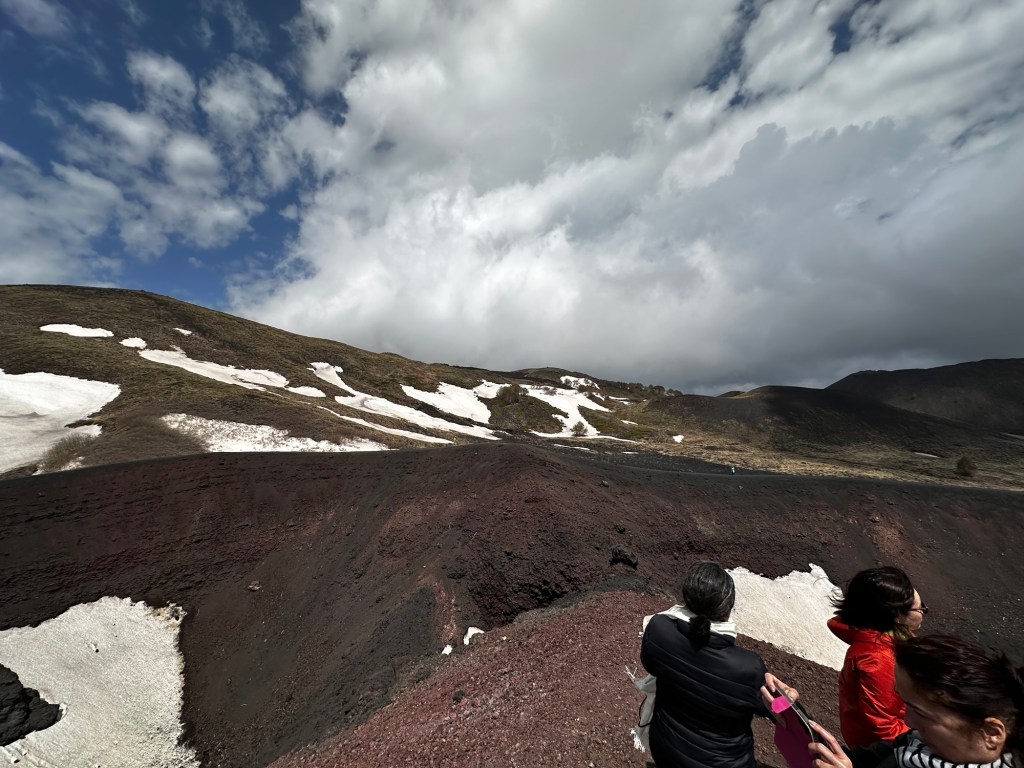
There is a fascinating paradox in the wines of Mount Etna. Travel to Sicily, deep in the Mediterranean (and about as far south in Italy as you can go), and you might reasonably expect the wines to be rich, ripe and powerful. Yet climb the slopes of Europe’s largest active volcano, where pre-phylloxera vines have survived for well over a century, and something quite different emerges: wines of remarkable freshness, elegance and mineral tension.
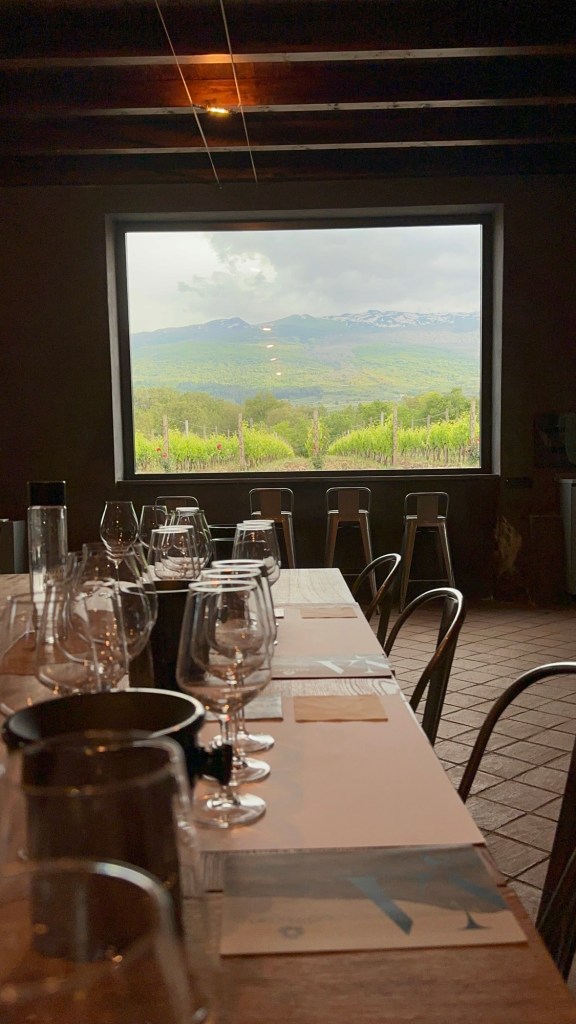
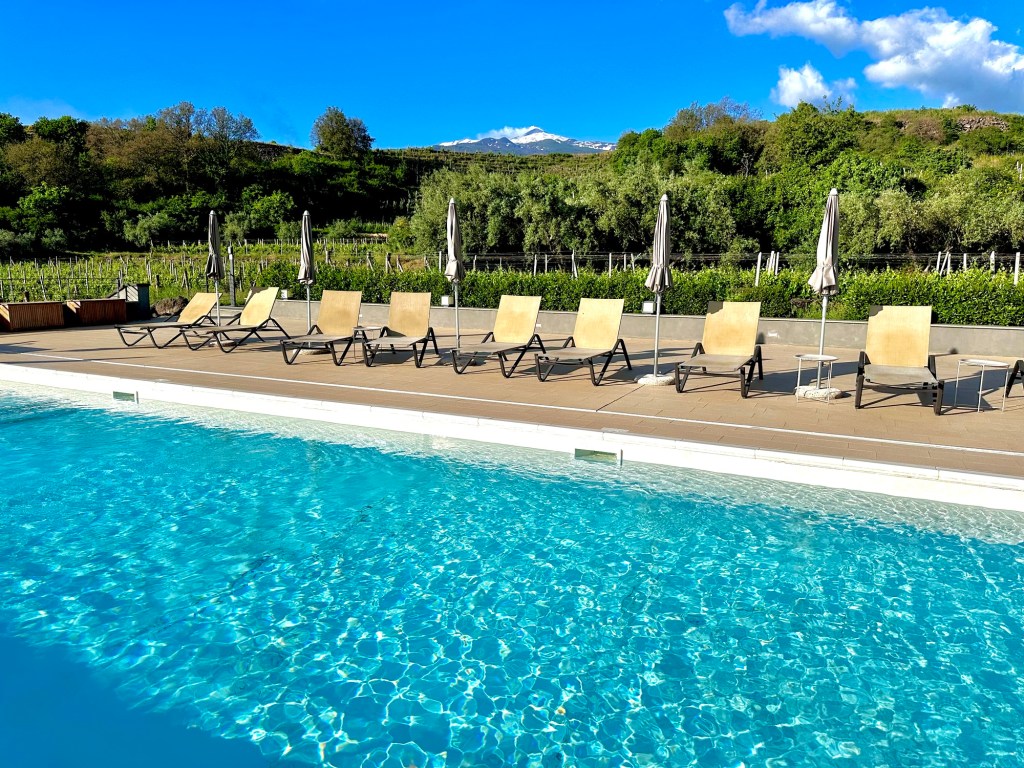
Here, intense Mediterranean sunshine meets vineyards planted hundreds of metres above sea level. Warm days give way to considerably cooler nights, helping preserve acidity and extend the growing season. Beneath the vines lies an extraordinarily complex patchwork of volcanic soils created by successive eruptions and lava flows. Add indigenous grape varieties, old alberello-trained vines and, in some vineyards, ungrafted pre-phylloxera plant material more than a century old, and Etna becomes one of Europe’s most fascinating wine landscapes.
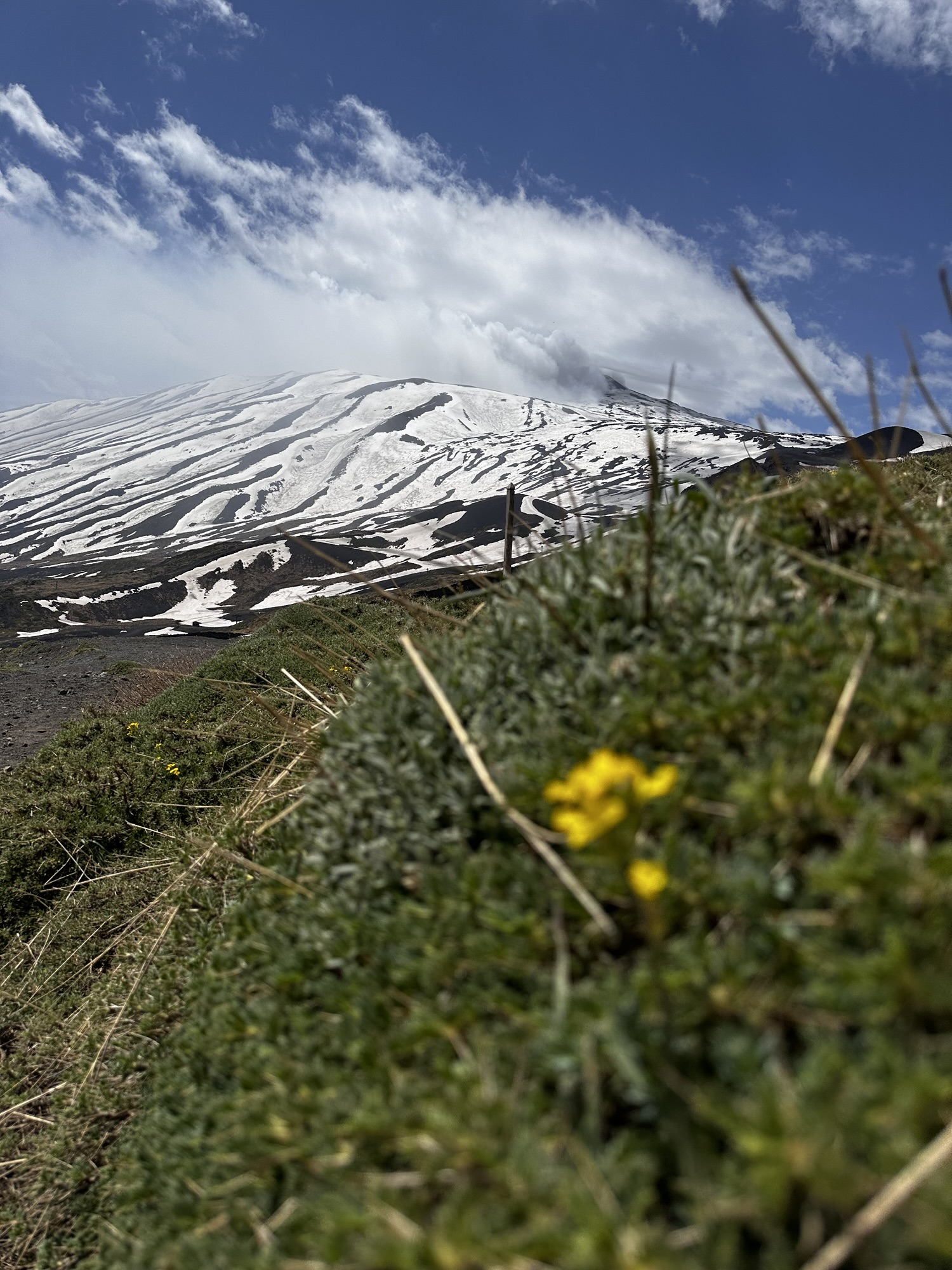
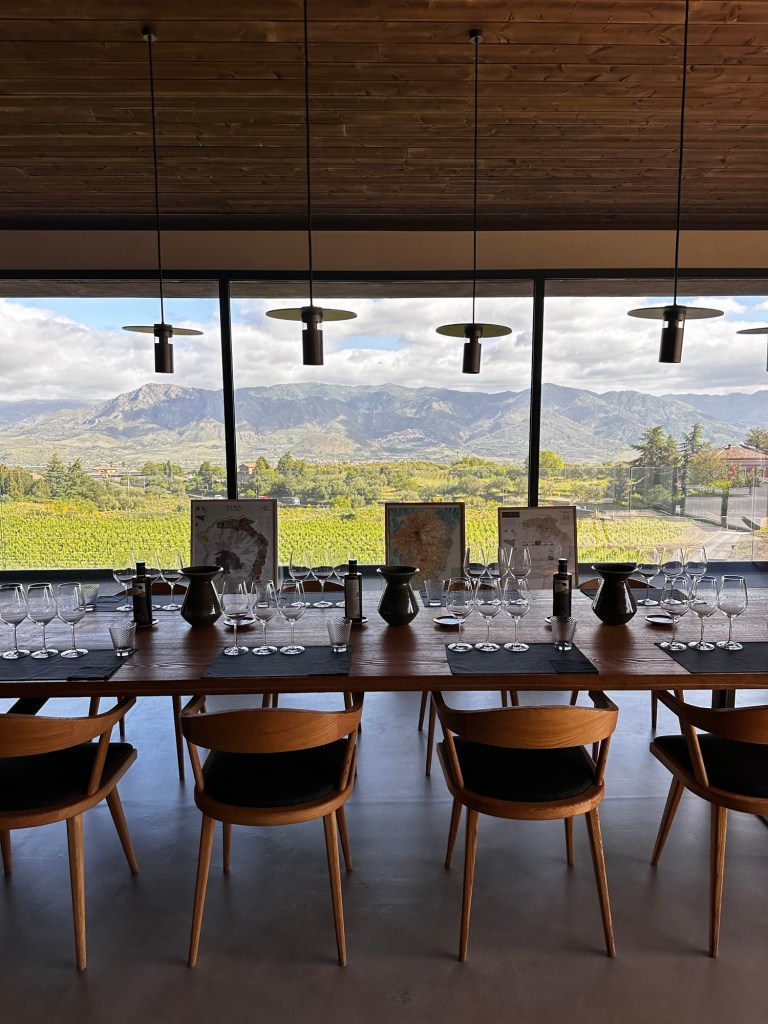
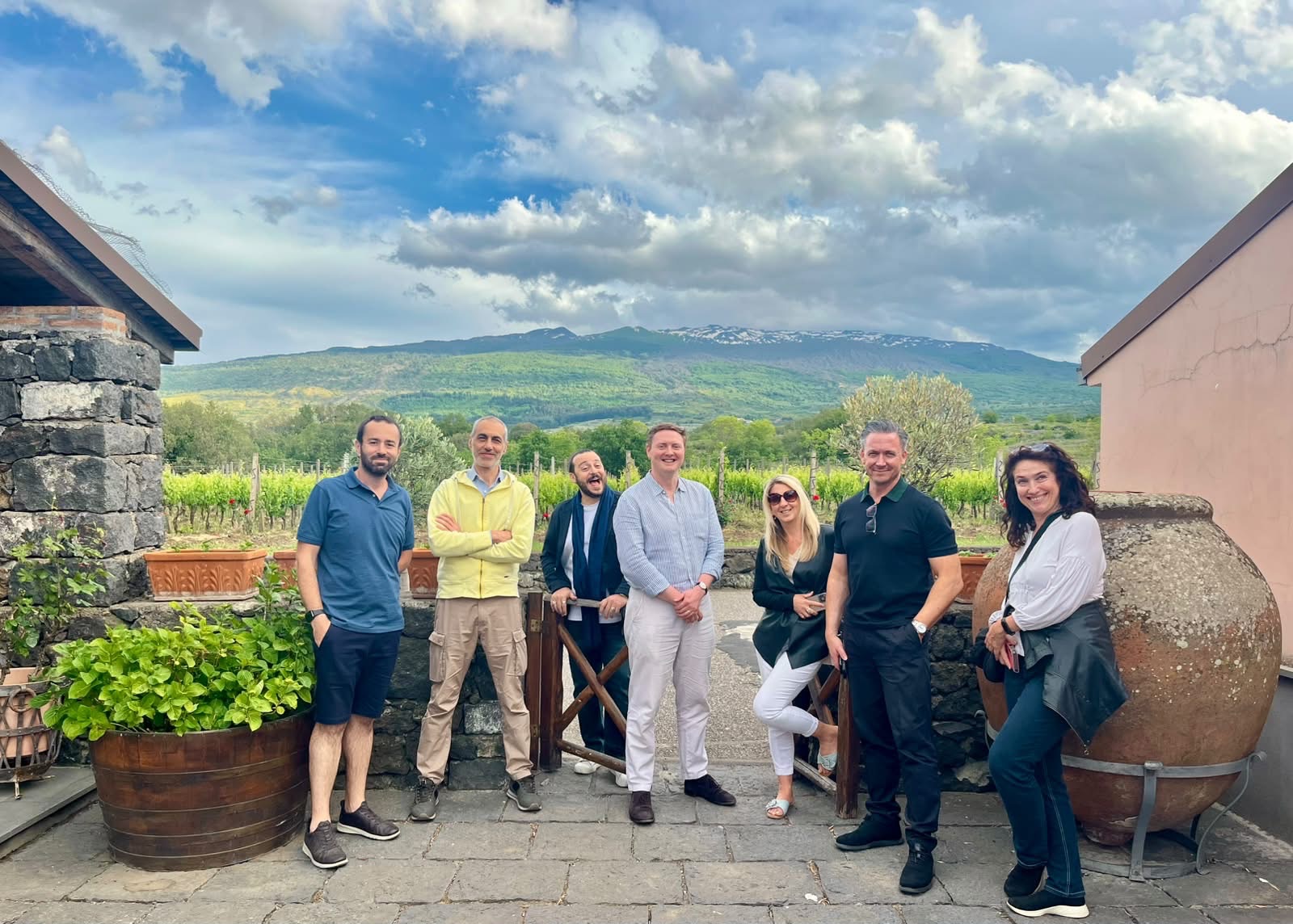
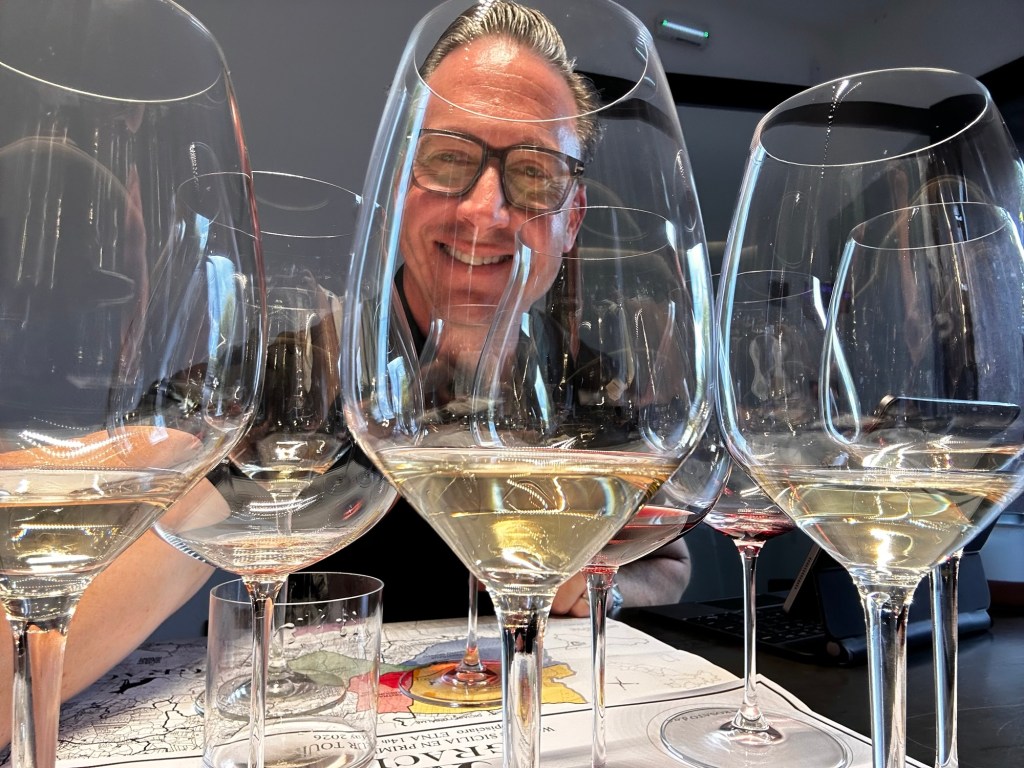
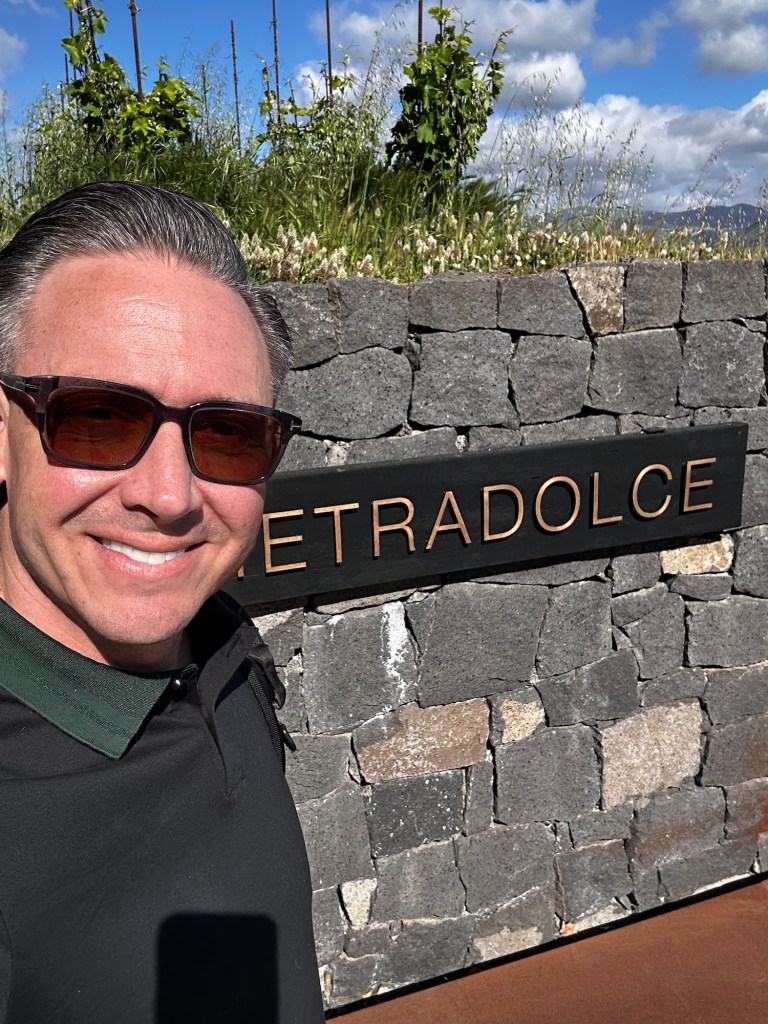
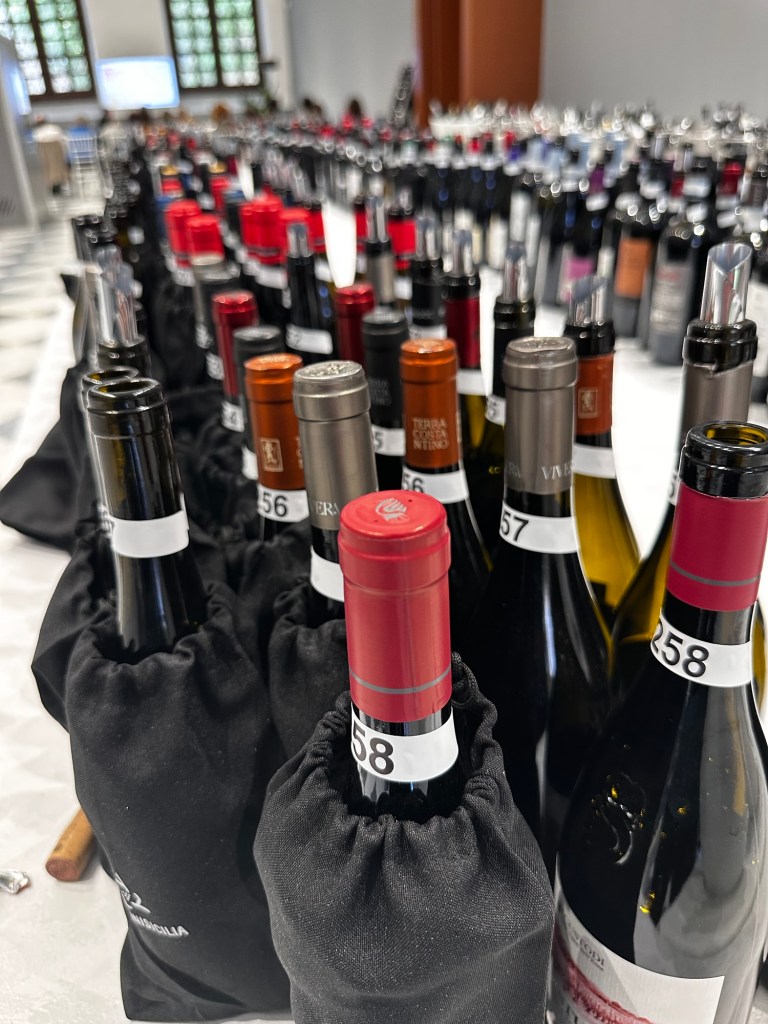
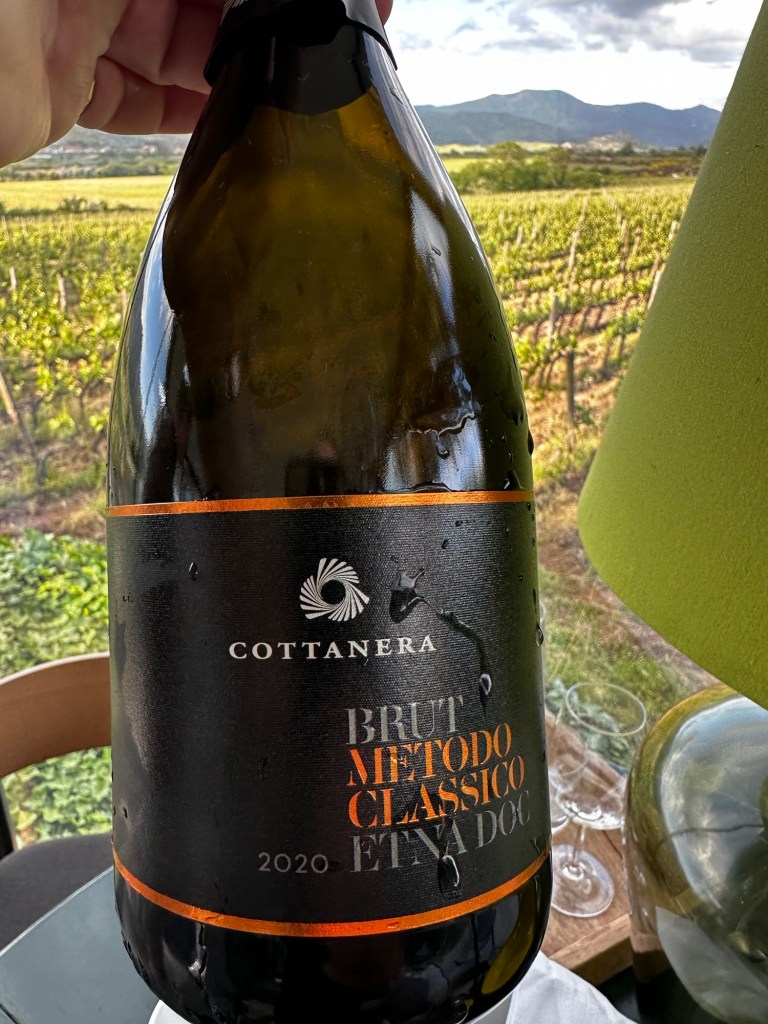
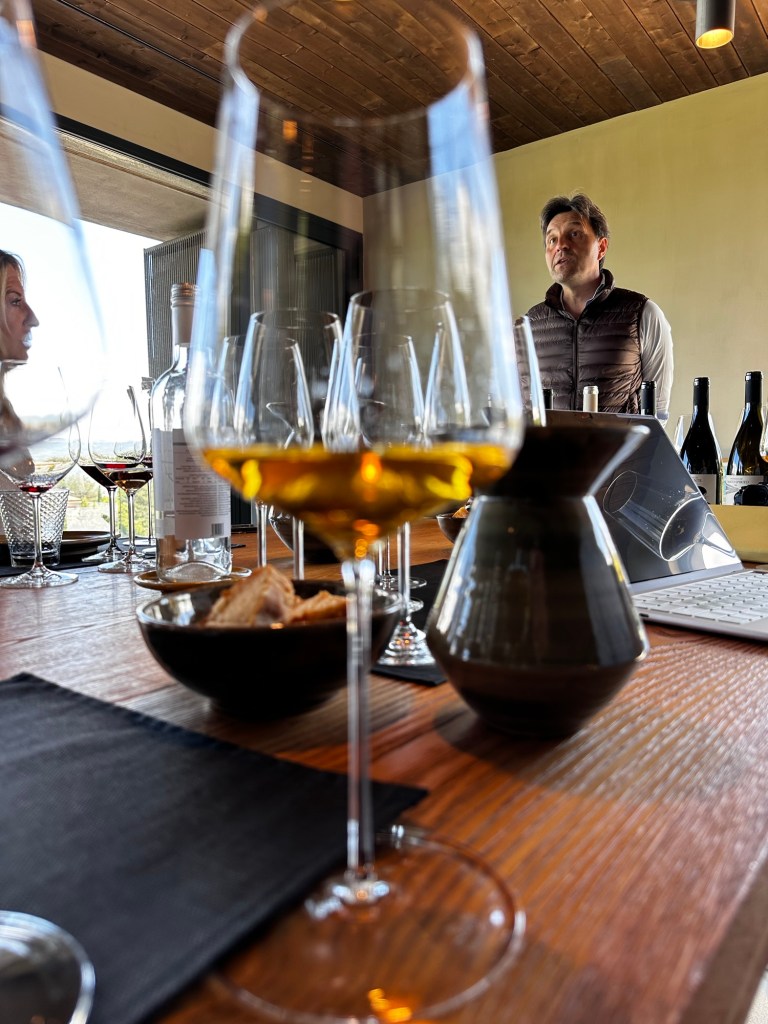
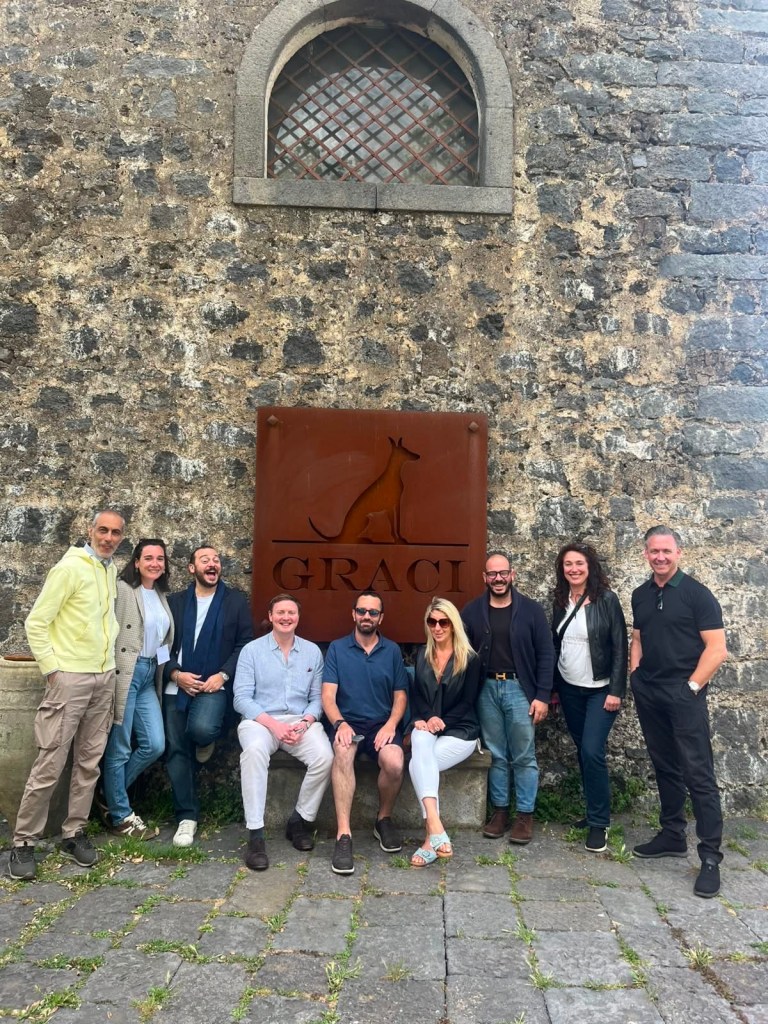
During Sicilia en Primeur in May 2026, I spent several days exploring Etna, visiting wineries including Pietradolce, Palmento Costanzo, Graci and Cottanera, while also tasting extensively from producers across the appellation.
The experience reinforced something increasingly clear: Etna is now producing some of Italy’s most distinctive red and white wines.
Nerello Mascalese and Carricante: Etna’s Indigenous Stars
Two indigenous varieties sit at the centre of this renaissance: Nerello Mascalese for Etna Rosso and Carricante for Etna Bianco. For wine drinkers unfamiliar with them, Burgundy provides a useful, although imperfect, reference point.
Nerello Mascalese shares some of Pinot Noir’s ability to produce relatively pale, beautifully expressive wines capable of remarkable delicacy and vineyard transparency. But its personality is distinctly Sicilian. Red cherry, plum, blood orange and dried flowers frequently mingle with Mediterranean herbs, graphite, iron, smoke and volcanic ash. Fine but persistent tannins provide structure without requiring tremendous body.
Carricante can be equally intriguing for lovers of serious Chardonnay and other mineral-driven white wines. Orchard and citrus fruit, herbs and occasional floral notes frequently meet wet stone, crushed rock and a distinctly saline character. The best examples possess tremendous acidity and can develop impressive texture and complexity with age, like fine white Burgundy.
But these aren’t Burgundian wines growing on a volcano. They are uniquely Etnean wines whose combination of elegance, site transparency and complexity makes Burgundy a useful reference point for understanding them. And therein lies the paradox: Mediterranean ripeness without Mediterranean heaviness.
A Volcano of Many Terroirs
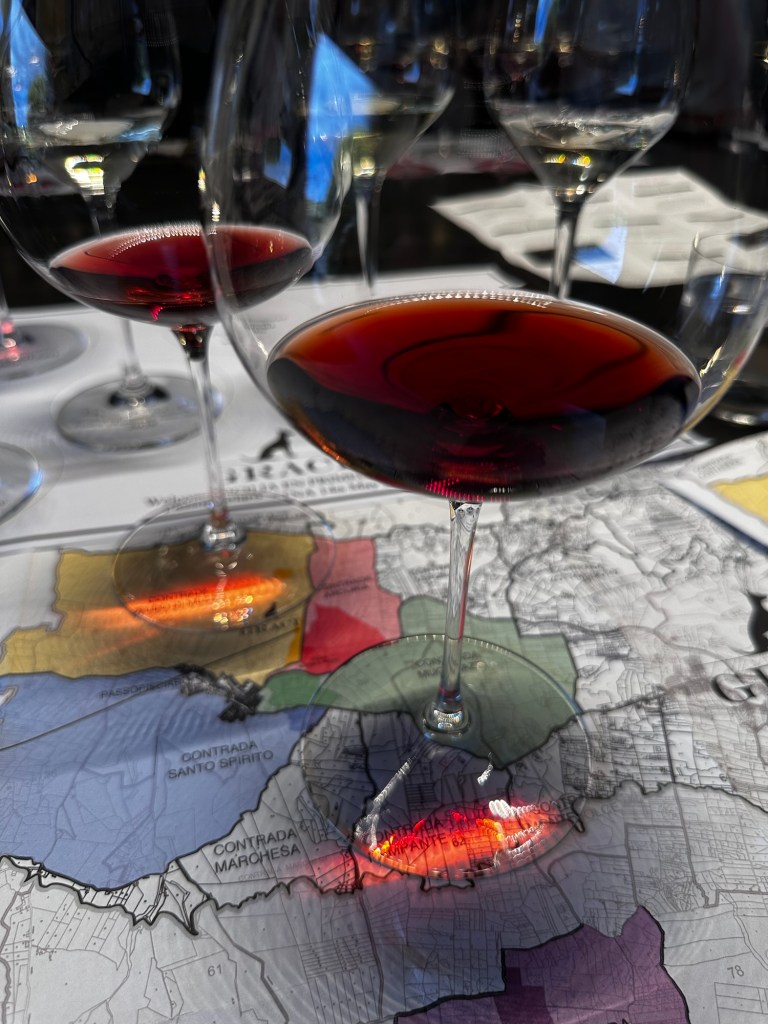
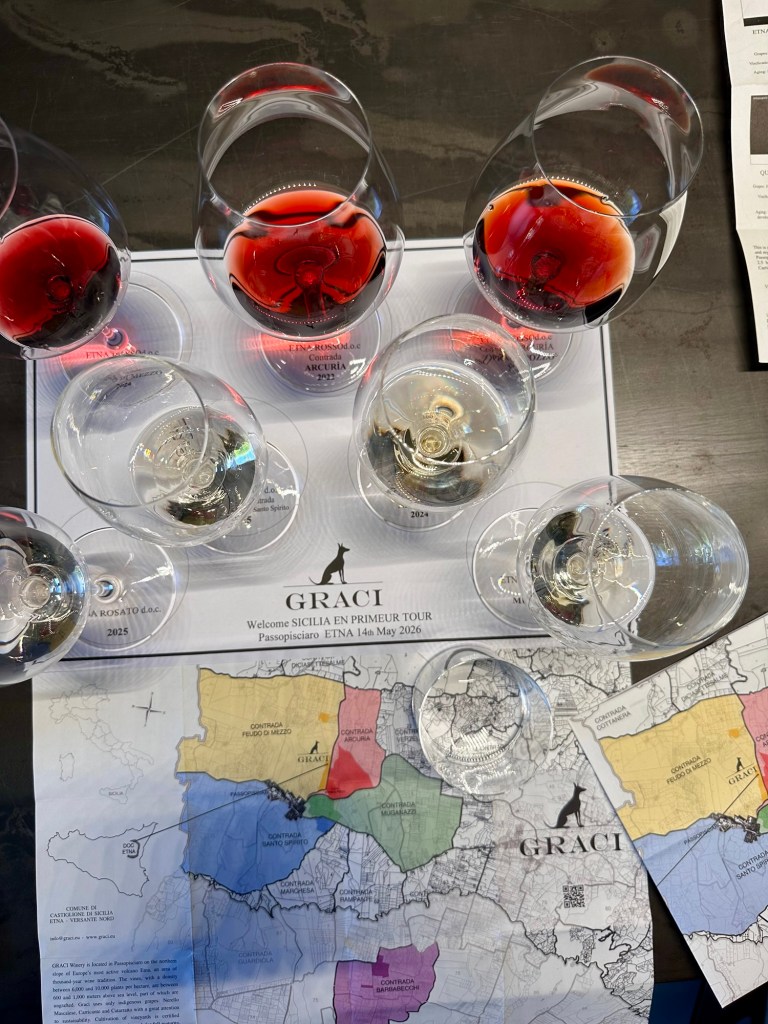
Etna isn’t one volcanic terroir. Its slopes are a geological mosaic formed by different eruptions and lava flows, with dramatic changes in altitude, exposure and microclimate. The Etna DOC recognizes 151 contrade across 14 municipalities, and the differences between them can be profound.
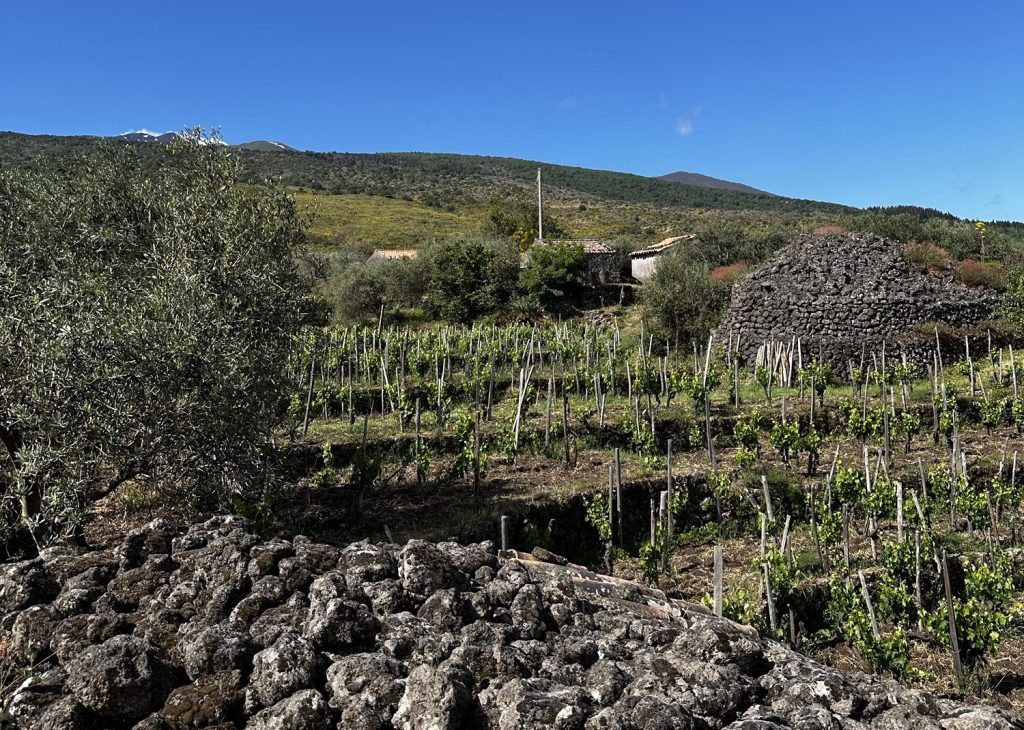
The parallels with Burgundy are particularly compelling: much like its famous vineyard parcels, or climats, Etna’s contrade demonstrate how differences in soil, elevation, exposure and microclimate can produce remarkably different expressions of the same grape variety, even between neighbouring vineyards. Here, however, the underlying geology can change dramatically as well, with individual lava flows contributing another layer to the identity of each site. Successive eruptions have laid down overlapping flows of different ages and chemical compositions, creating a complex volcanic mosaic in which concentrations of elements such as iron, magnesium and other minerals as well as soil structure, drainage and water-holding capacity, can vary considerably from one flow to the next. Vineyards planted only a short distance apart may therefore be rooted in materially different volcanic substrates, adding yet another dimension to Etna’s extraordinary sense of place.
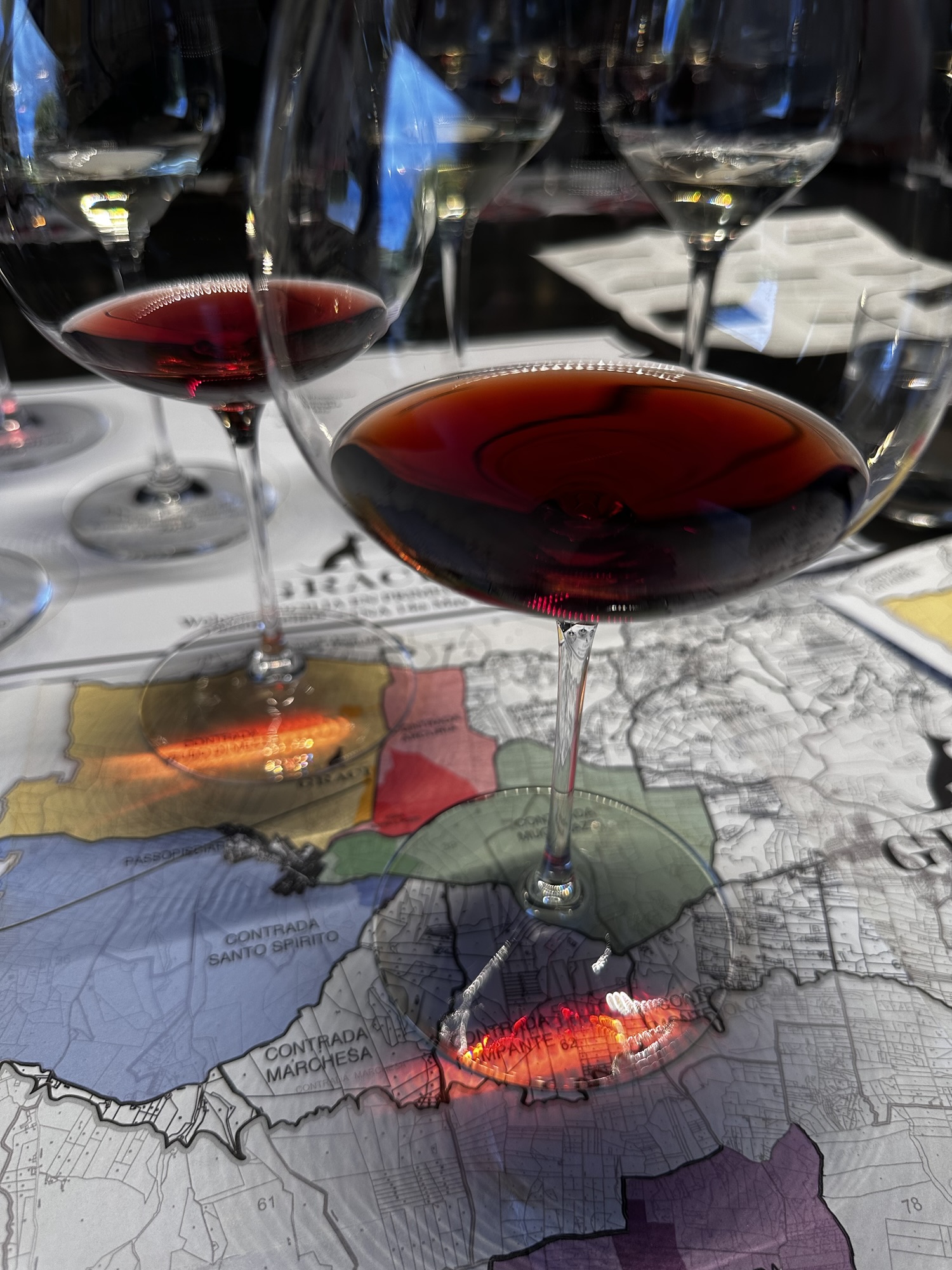
Etna also provides an extraordinary reminder that this terroir is not merely ancient geological history. Unlike the marine sediments adn limestone formations underlying many famous European wine regions, the geological landscape here is still being created.
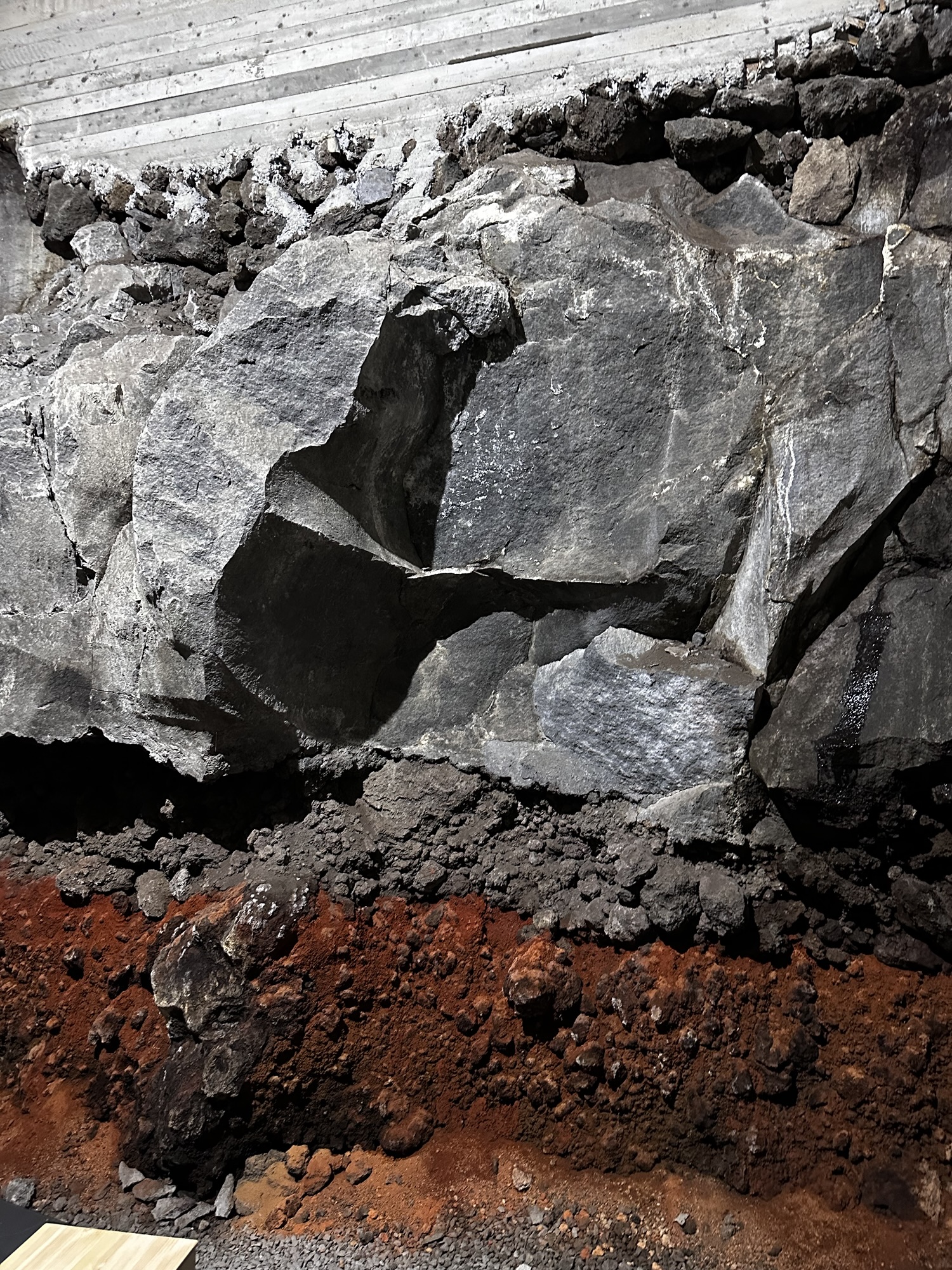
The dramatic 1981 eruption, which sent lava rapidly down the volcano’s northern flank and threatened the town of Randazzo, demonstrated how quickly Etna can reshape its landscape. Successive eruptions have left neighbouring areas sitting on volcanic material of different ages and compositions, helping create the complex geological patchwork beneath Etna’s vineyards today, such as this cross section in Graci’s winery, showing several layers of completely different lava flows.
During my tastings, Nerello Mascalese moved from fragrant red fruit and flowers to iron, graphite, balsamic notes and volcanic ash, sometimes within wines grown only a short distance apart. Carricante proved equally compelling, ranging from delicate orchard fruit, citrus and sea-breeze salinity to intensely flinty, smoky and structured wines with remarkable tension and persistence. Across both varieties, there was an unmistakable sense of variation from site to site, the influence of altitude, exposure, vine age and microclimate layered over Etna’s extraordinarily complex volcanic geology. Some wines felt almost weightless and perfumed; others darker, more savoury and profoundly mineral in character. The volcano wasn’t simply part of the scenery. Its presence seemed woven into the identity of the wines, repeatedly revealing itself in the glass.
Pietradolce: Making Terroir the Variable
Pietradolce provided one of the clearest demonstrations of Etna’s remarkable vineyard diversity. The estate farms approximately 35 hectares, primarily on the northern slopes between 650 and 950 metres, including vineyards containing ungrafted pre-phylloxera vines between roughly 90 and 150 years old.
Its philosophy is particularly revealing. Winemaking for its cru wines is intentionally kept relatively consistent so that soil, microclimate and vine material become the variables. Taste those wines together and the differences become remarkably clear.
Pietradolce Barbagalli Etna Rosso 2020 — 95 points
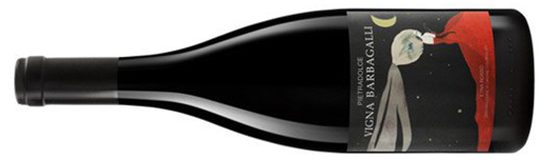
Barbagalli represents the summit of Pietradolce’s pursuit of Etna terroir. Produced in tiny quantities—roughly 1,600 to 2,000 bottles annually—from a small pre-phylloxera parcel in Contrada Rampante around 900 metres above sea level, its Nerello Mascalese vines average approximately 100–120 years of age. The 2020 is elegant and intensely savoury rather than powerful, displaying tremendous tension and a distinctly volcanic personality. Flinty, mineral-driven aromatics lead into savoury red fruit, dried herbs and subtle smoky notes. The tannins are remarkably fine but retain youthful energy, giving the wine considerable structure without overwhelming its delicacy. There is an almost tactile mineral sensation running through the palate and into the persistent finish. This is Etna Rosso at its most serious: old vines, extreme elevation and volcanic terroir expressed through finesse rather than extraction. Still youthful, it should continue developing beautifully with additional bottle age. – 95 points.
Pietradolce Archineri Etna Bianco 2024 — 93+ points
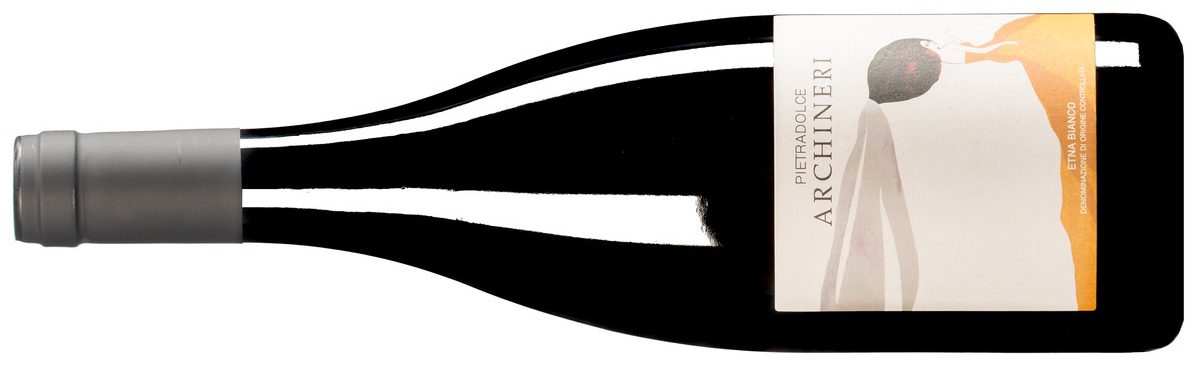
From old-vine Carricante grown in a single vineyard, Archineri demonstrates why Etna Bianco deserves considerably more attention from serious white-wine drinkers. Ripe yellow apple and fresh orchard fruit are joined by Mediterranean herbs and a subtle almond-croissant character. The palate gains additional volume without sacrificing freshness, with crisp apple, sea salt and pronounced mineral tension carrying through the finish. Six months in stainless steel followed by extended bottle refinement keeps the fruit beautifully transparent. There is ripeness here, but also tremendous energy—the recurring Etna combination of Mediterranean fruit and mountain freshness. 93+ points.
Palmento Costanzo: Tradition Beneath the Volcano
At Palmento Costanzo, Etna’s past feels particularly close. The estate sits on the northern slope near Passopisciaro and Castiglione di Sicilia, with vineyards primarily between 600 and 800 metres elevation. Its restored historic palmento and proximity to old lava flows provide a vivid reminder that winegrowing here has always existed alongside an active geological force.
Palmento Costanzo Prefillossera Etna Rosso 2020 — 94 points
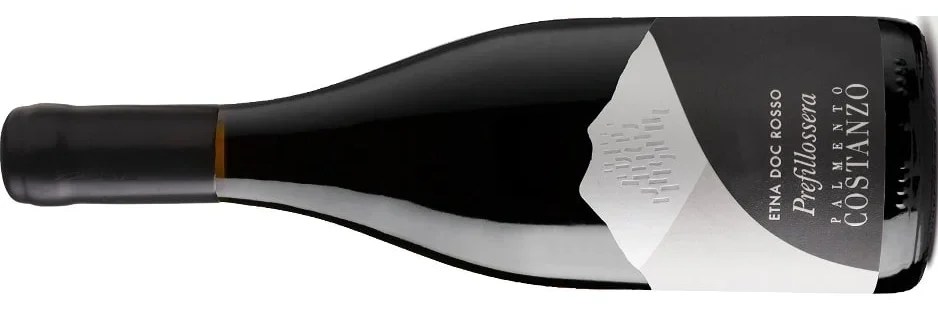
The name tells much of the story. Produced from old pre-phylloxera vines, this was the most complete wine I tasted at Palmento Costanzo and a beautiful example of mature Nerello Mascalese complexity. Cherry and plum provide the fruit core, but the wine quickly moves beyond fruit into sweet spice, leather and balsamic nuances. A distinctive iron-like mineral character emerges beneath everything, giving the wine a savoury, almost ferrous dimension that feels entirely appropriate to its volcanic origins. What impressed most was its balance. The fruit, developing tertiary character, acidity and mineral structure all work together without any element dominating. It is complex yet wonderfully refreshing, illustrating how Etna Rosso can develop considerably with age while retaining the energy that makes these wines so compelling. – 94 points.
Palmento Costanzo Contrada Santo Spirito Etna Rosso 2021 — 94 points
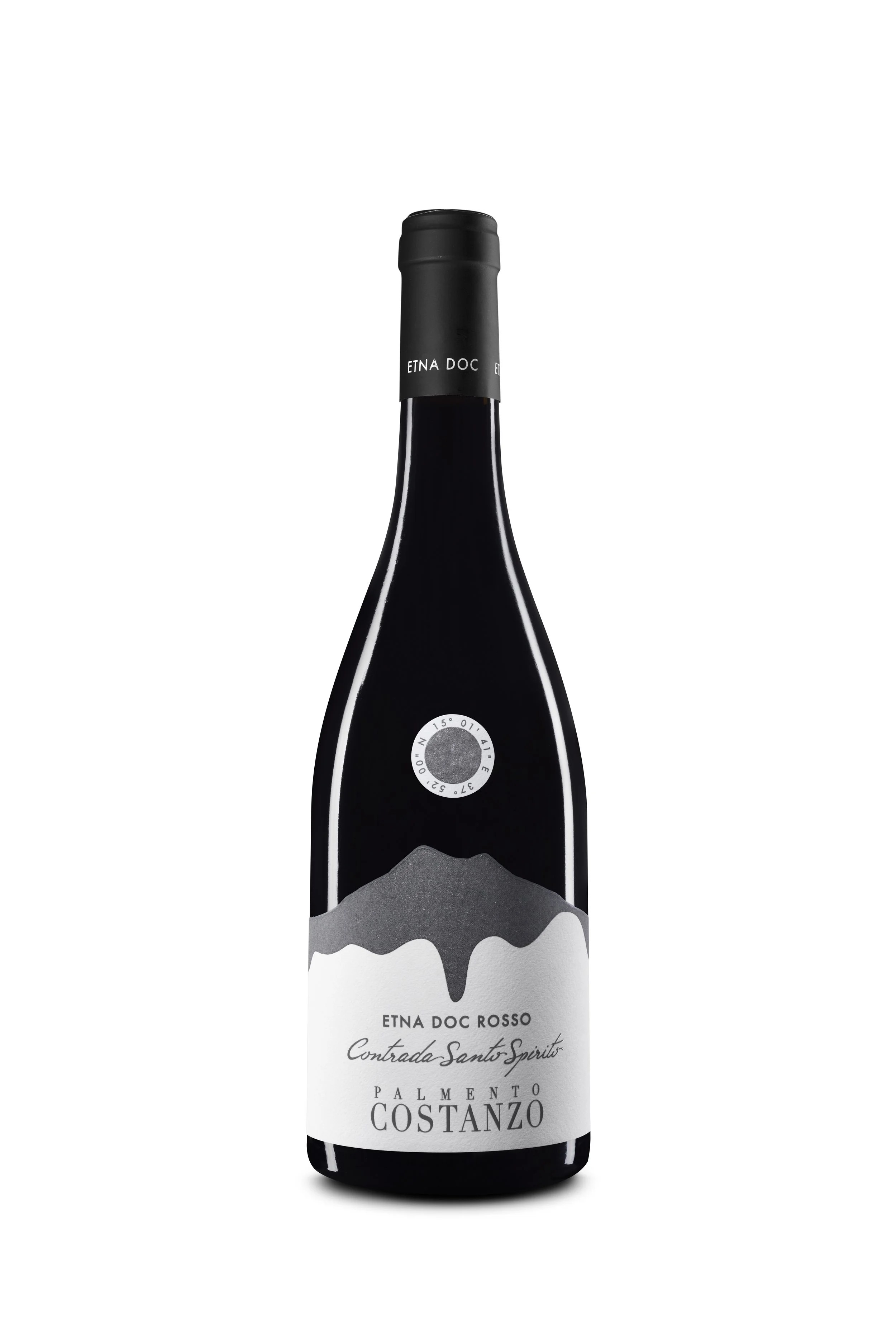
From the north-facing Contrada Santo Spirito near Passopisciaro on Mount Etna’s northern slope, this beautiful Etna Rosso is produced from 90% Nerello Mascalese and 10% Nerello Cappuccio, grown between 720 and 780 metres above sea level. The alberello-trained vines, some approaching 100 years of age, grow in volcanic sands scattered with lava stones and rocks, with alkaline and ferrous components contributing to the distinctive character of this historic site. Faint ruby in the glass with subtle garnet tones and a developing brickish rim, the 2021 opens with a wonderfully expressive and evolving bouquet of ripe plum and dark cherry layered with smoke, sweet spice, leather and savoury volcanic nuances. There is delicious complexity here, both aromatically and texturally, yet the wine remains wonderfully composed and elegant. The palate is harmonious and finely textured, with juicy dark cherry and plum carried by refreshing acidity and a subtle mineral undercurrent. Polished, beautifully integrated tannins provide structure without interrupting the wine’s silky flow, while smoky, savoury notes linger through the long and refreshing finish. Fermented in truncated cone-shaped oak vats and matured for 24 months in French oak followed by a further year in bottle, the wine is now showing beautiful integration and complexity. An exciting, wonderfully balanced expression of Santo Spirito that captures the elegance, freshness and volcanic personality of Etna’s northern slope. Drinking beautifully now. 94 points.
Tornatore Etna Rosso Riserva 2018 – 94 points
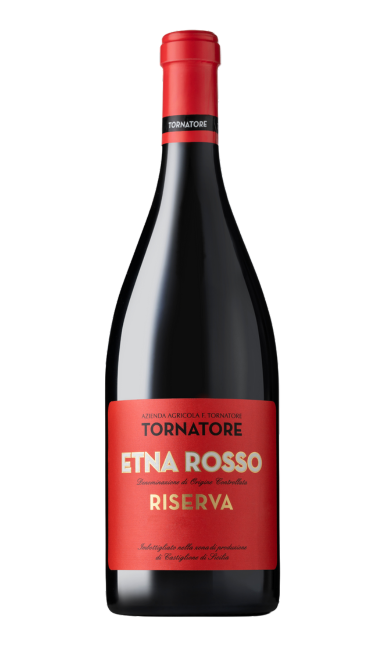
Produced from a selection of the finest Nerello Mascalese and Nerello Cappuccio grapes from Tornatore’s oldest estate vineyards on the northern slopes of Mount Etna, this Riserva represents a beautifully mature and harmonious expression of Etna Rosso. These old vines grow on small volcanic terraces supported by restored dry-stone walls, producing naturally low yields that provide the foundation for a wine of impressive concentration and complexity. The 2018 opens with an expressive bouquet of ripe cherry, dark cherry and plum layered with sweet spice, Mediterranean herbs, subtle leather and smoky volcanic nuances. With time in the glass, the fruit and savoury elements become increasingly integrated, revealing a wine with impressive depth yet no sense of heaviness. The palate is wonderfully harmonious and refreshing, with ripe red and dark fruit framed by spice and persistent volcanic minerality. Silky, beautifully integrated tannins provide structure and texture, while the wine’s vibrant acidity keeps everything fresh and composed through the long, savoury finish. Following fermentation and approximately two weeks of maceration in wooden vats, the wine undergoes an extended maturation of three years in large French oak barrels followed by additional refinement in concrete and bottle. That patient élevage is evident in the seamless integration and polish of the finished wine. At eight years of age, the 2018 is drinking beautifully, combining maturity, freshness and Etna’s unmistakable volcanic character. 94 points.
Graci: Etna in High Definition
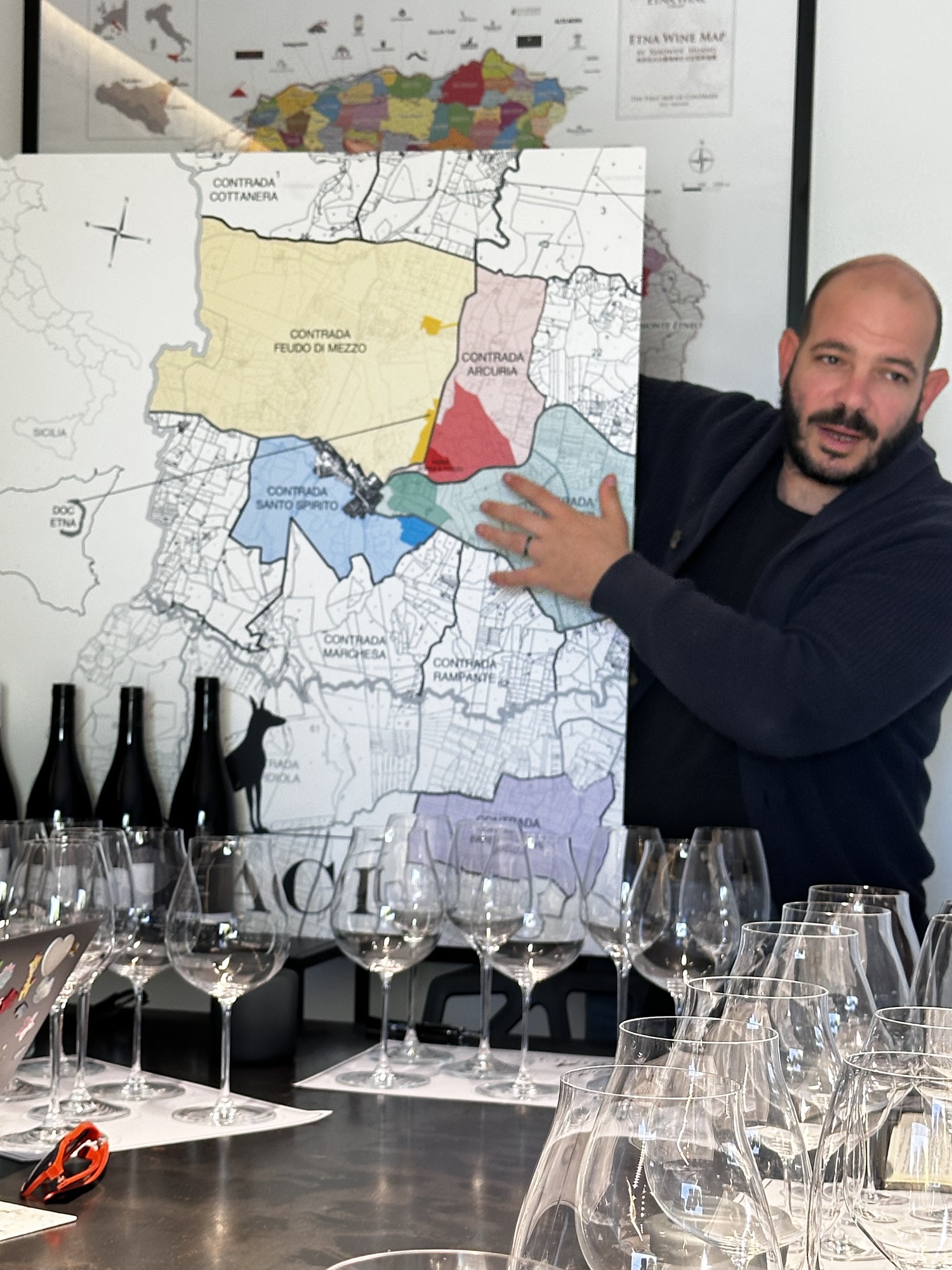
Few producers demonstrated the intellectual excitement surrounding modern Etna better than Graci. Alberto Graci farms approximately 30 hectares around Passopisciaro, including important vineyards in Arcurìa, Feudo di Mezzo and Muganazzi. His approach prioritizes identity over power, allowing the individual personalities of Etna’s contrade to emerge with remarkable clarity.
Two wines in particular demonstrated the extraordinary range possible from Etna’s principal varieties.
Graci Etna Bianco Contrada Muganazzi 2024 — 95 points
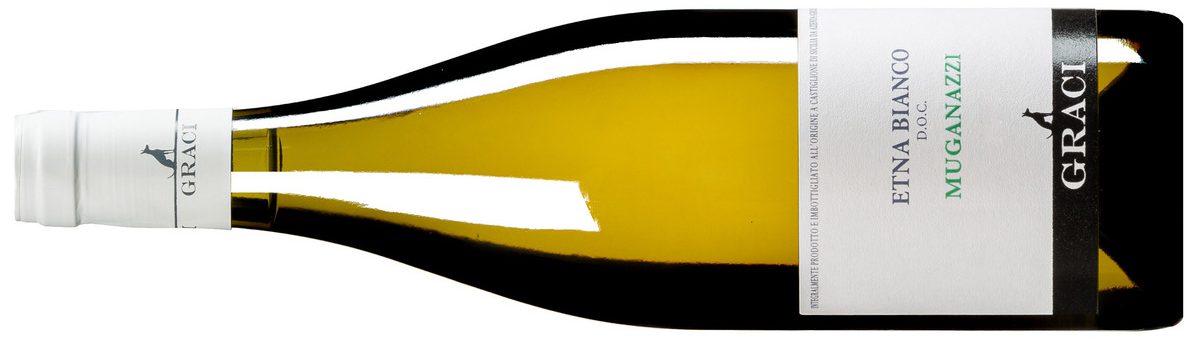
One of the most distinctive Carricante wines I tasted during Sicilia en Primeur.
Muganazzi immediately separated itself from the surrounding Etna Biancos through an intensely volcanic aromatic profile. Flint, ash and Mediterranean herbs frame ripe orchard fruit and crisp apple, with a subtle richness adding depth without diminishing freshness. The palate possesses terrific fruit purity but is ultimately defined by tension. Saline, mineral sensations persist alongside the fruit, creating a wine that feels simultaneously ripe and almost austere. It was fascinating to learn that Graci planted this site only around a decade ago and quickly recognized how differently it expressed itself. This is exactly what makes Etna so exciting: Carricante acts as a remarkably transparent vehicle for the identity of individual volcanic sites. – 95 points.
Graci Etna Rosso Contrada Arcurìa Sopra Il Pozzo 2017 — 98 points
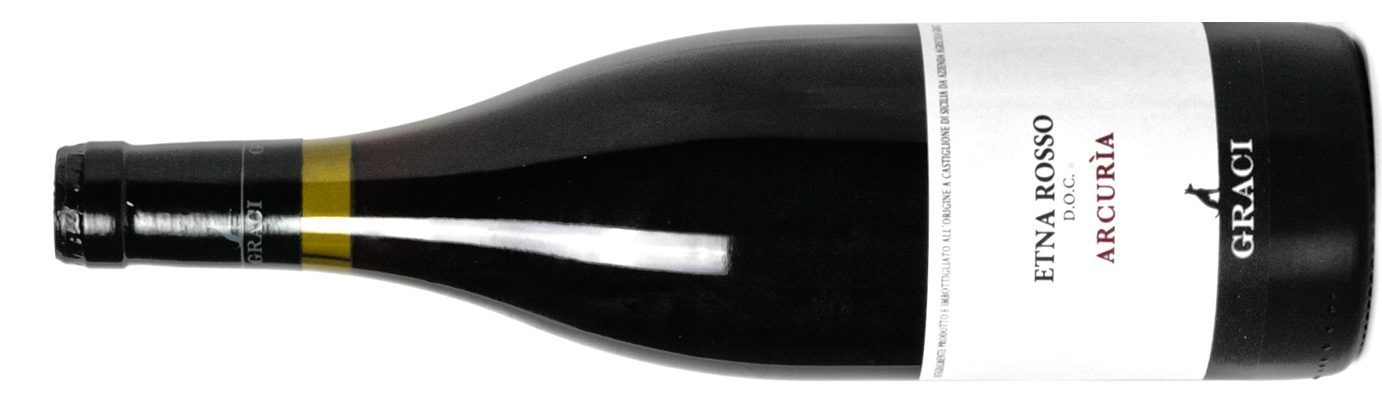
Perhaps the finest wine I tasted during my 2026 visit to Sicily.
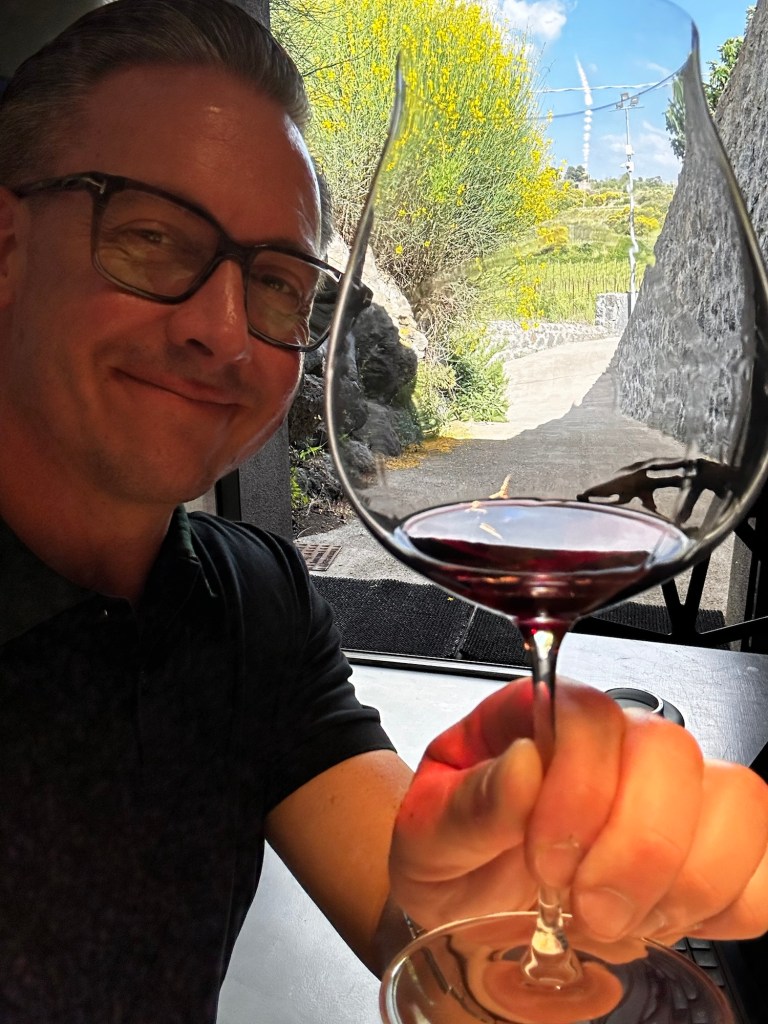
At nearly nine years of age, this extraordinary Nerello Mascalese has reached a beautiful stage of development. A delicate brick and iodine hue introduces an endlessly evolving bouquet of volcanic ash, graphite, leather, dried rose, blood orange and savoury Mediterranean herbs. The complexity is extraordinary, but what makes the wine profound is its ability to balance seemingly contradictory characteristics. It is delicate yet intense. Mature yet vibrant. Savoury and earthy, but lifted by citrus and red-fruit freshness. Silky, resolved tannins support red cherry, dried citrus peel and balsamic nuances, while persistent volcanic minerality carries effortlessly through the finish. There is no excess extraction or overt oak attempting to manufacture complexity. The wine achieves it through site, maturity and extraordinary detail. This was the Etna paradox captured in a single glass: Mediterranean warmth, mountain freshness and volcanic austerity existing simultaneously and harmoniously. A benchmark Etna Rosso and one of the finest expressions of Nerello Mascalese I have tasted. 98 points.
Beyond the Cellar Door: Etna’s Remarkable Depth
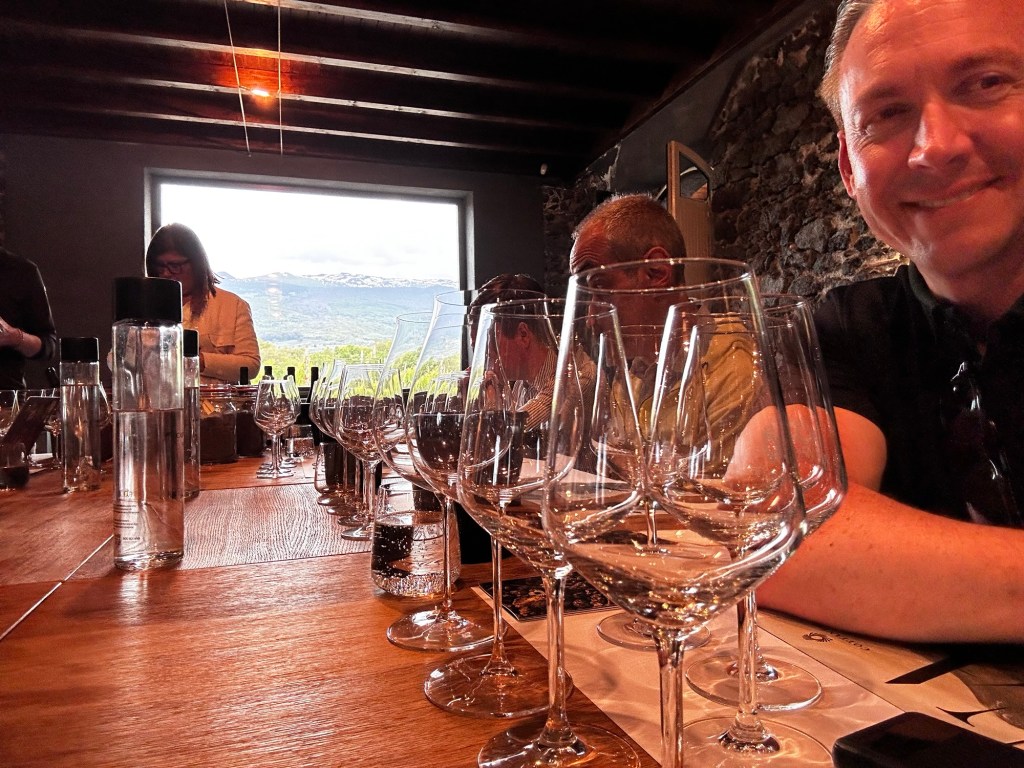
Perhaps the greatest indication of Etna’s progress came outside the estates I visited. While time spent at individual wineries provided an invaluable opportunity to understand their vineyards, philosophies and interpretations of the volcano, the broader Sicilia en Primeur tastings offered a different perspective: the chance to taste extensively across Etna and assess the appellation as a whole.
It quickly became apparent that Etna’s renaissance is no longer being carried by a small group of famous producers. The quality has become remarkably deep. Across dozens of wines, I encountered compelling expressions of both Nerello Mascalese and Carricante from established names and lesser-known estates alike. More importantly, there was no single formula for success. Some wines emphasized delicate fruit and floral character, others were decidedly savoury and mineral, while still others showed the structure and complexity to suggest considerable ageing potential.
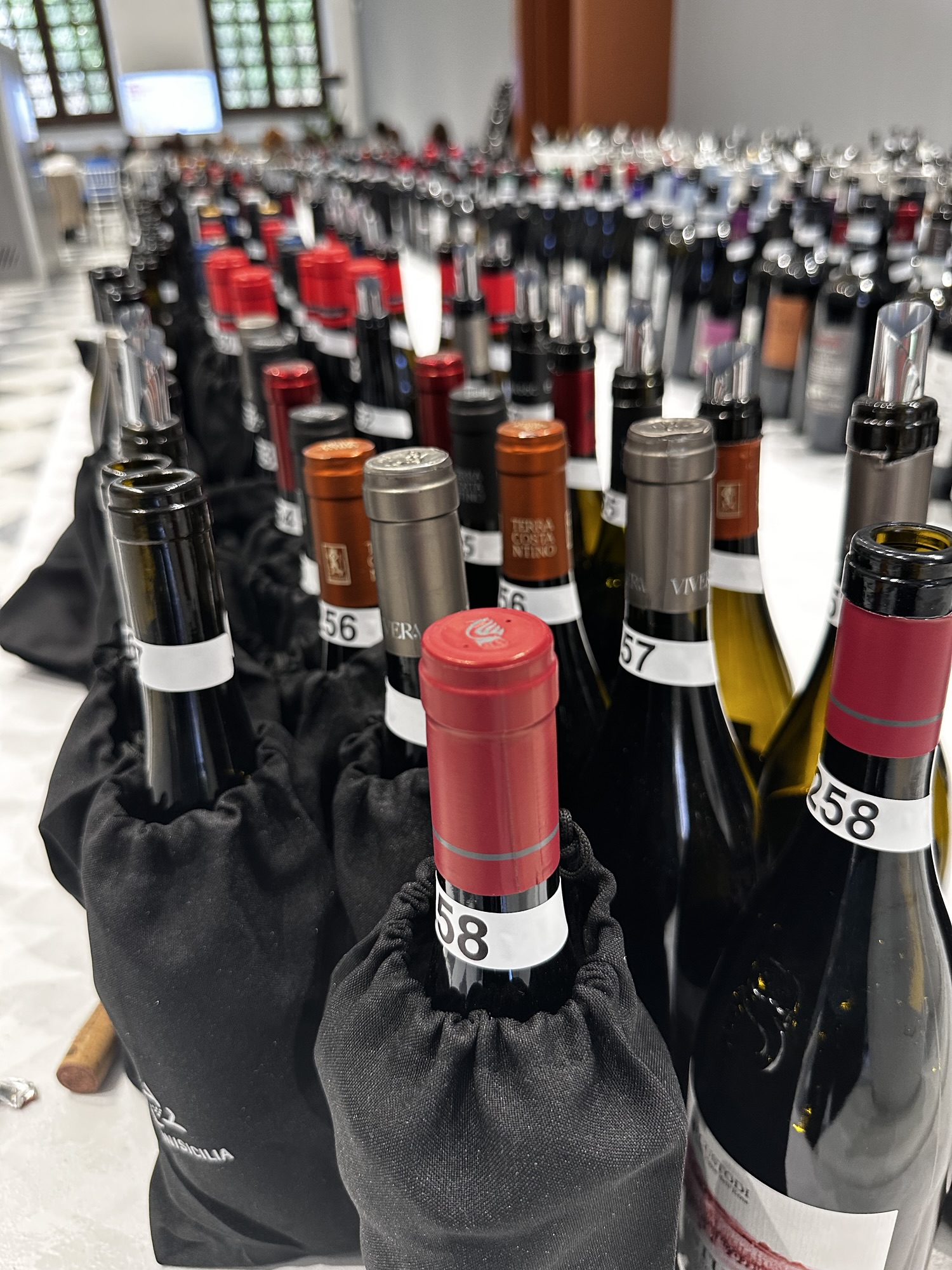
That diversity is increasingly one of Etna’s greatest strengths. As more producers explore individual contrade, preserve old vineyards and better understand the relationship between grape variety, elevation, exposure and Etna’s complex patchwork of volcanic soils, the wines are becoming increasingly precise and site-specific.
What impressed me most was the consistency with which freshness and mineral tension remained the common thread. Even when the fruit was ripe and generous, the wines rarely felt heavy. Instead, acidity, savoury complexity and Etna’s distinctive mineral character provided energy and balance. It was another reminder of the remarkable paradox at the heart of this region: wines grown beneath the intense Mediterranean sun, yet capable of a precision, freshness and elegance more commonly associated with considerably cooler climates.
For wine lovers, that growing depth is particularly exciting. Etna is no longer simply a region with a few benchmark bottles worth seeking out; it is becoming an appellation where the name Etna itself increasingly deserves attention on a wine-shop shelf. The challenge, particularly in markets such as Ontario, is getting access to enough of these wines to fully appreciate just how much is happening on the slopes of this extraordinary volcanic wine region.
Highlights from Sicilia en Primeur:
Tasca d’Almerita Contrada Sciaranuova Vigna Vecchia 2020 — 96 points
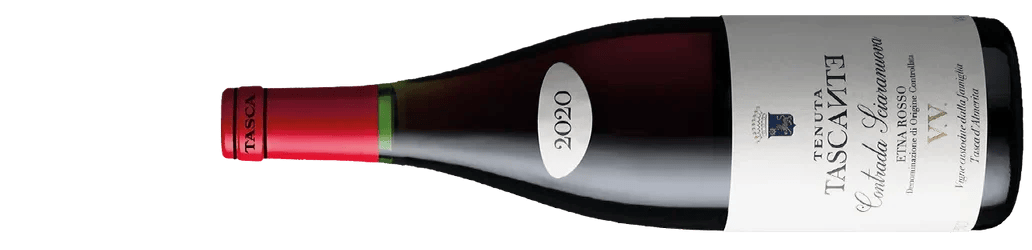
One of the most memorable Nerello Mascalese wines of the tasting. This old-vine vineyard sits around 730 metres above sea level in Contrada Sciaranuova, enclosed by a traditional dry-stone wall and surrounded by chestnut forest. The wine shows a developing garnet colour with a brickish rim and an immediately complex savoury bouquet. Red fruit, cherry and plum meet leather, spice, graphite and volcanic earth. Its structure is particularly impressive. Fine tannins provide considerable strength and persistence, yet the wine remains remarkably elegant and refreshing. Like a ballerina, it combines strength with grace, substantial structure delivered with seemingly effortless elegance. An outstanding expression of old-vine Etna Rosso. – 96 points.
Girolamo Russo San Lorenzo 2022 — 95 points
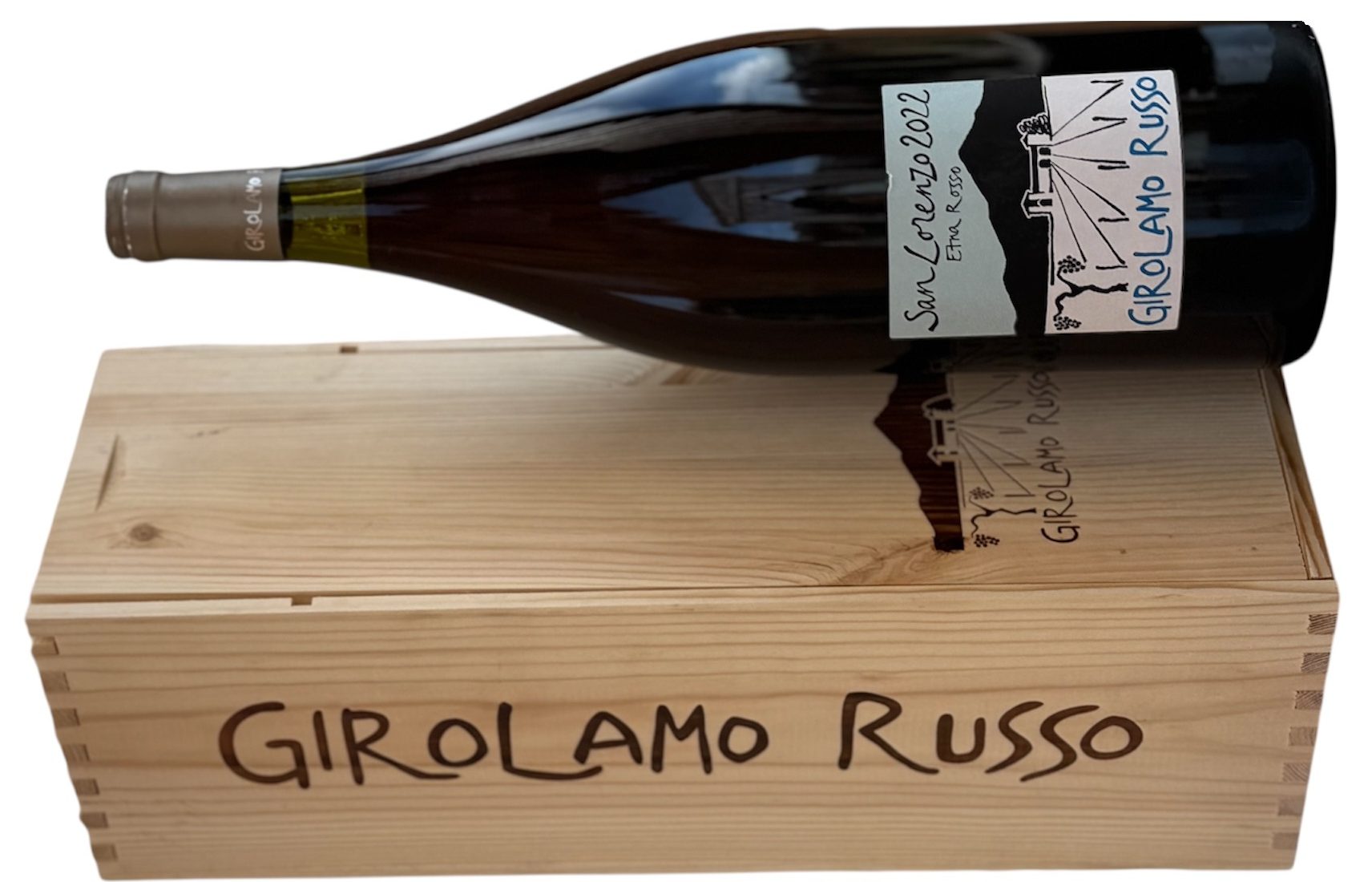
A beautifully complete Nerello Mascalese combining fruit, mineral character and texture. San Lorenzo is a single vineyard wine from a contrada in Randazzo. It sits 750-780 meters above sea level and the vines are now over 80 years old. The entire vineyard is around 8 hectares but only the oldest 1 hectare parcel of vines is selected for the single contrada bottling. San Lorenzo is fermented in a combination of formats – 2,600 liter barrels, cement, and vat. Red and darker fruits, including plum, emerge alongside an expressive bouquet of spice and delicate floral notes. Volcanic ash and iron add savoury complexity without overwhelming the purity of the fruit. The palate is harmonious and remarkably polished, with silky tannins and a creamy mid-palate giving way to renewed freshness and mineral tension. Fine tannins gradually emerge on the long, spicy and mineral finish. This is an excellent example of the refinement now possible on Etna: complexity without heaviness and structure without sacrificing elegance. – 95 points.
Girolamo Russo Feudo di Mezzo Etna Rosso 2024 — 95 points
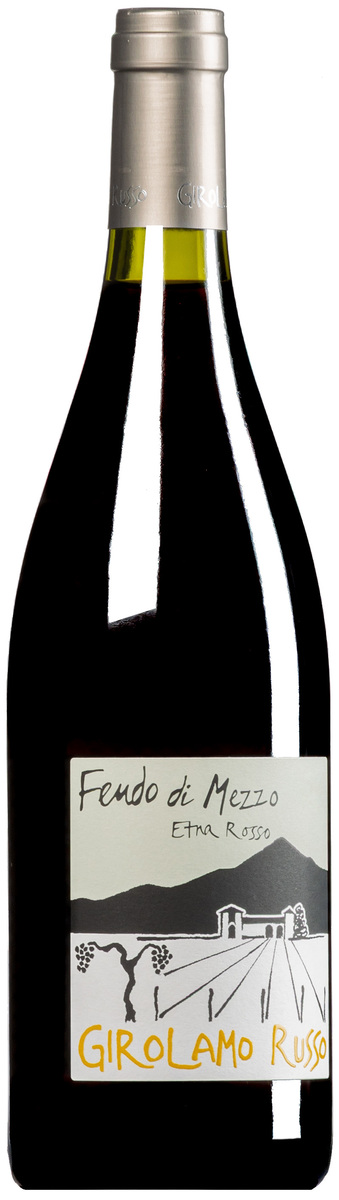
A superb expression of Nerello Mascalese from Feudo di Mezzo, one of the important contrade on Mount Etna’s northern slope. Like many of Etna’s most fascinating sites, Feudo di Mezzo is shaped by a complex patchwork of volcanic material from successive lava flows, contributing to wines that can show distinctive savoury, mineral and structured characteristics alongside the natural elegance of Nerello Mascalese. The 2024 displays a beautiful ruby colour with subtle garnet hues and immediately impresses with its expressive, complex bouquet. Ripe plum and cherry are layered with sweet spices, leather and savoury nuances, creating an enticing interplay between generous fruit and distinctly Etnean character.The palate is wonderfully harmonious, carrying the ripe cherry and plum through a finely textured core of spice and savoury complexity. There is impressive freshness and balance throughout, with polished tannins gradually emerging on the long finish to provide structure without compromising the wine’s elegance. Complex, harmonious and superbly crafted, this is a delicious Nerello Mascalese that demonstrates both the quality of Girolamo Russo and the distinctive potential of the Feudo di Mezzo contrada. 95 points.
Benanti Contrada Monte Serra Etna Bianco 2024 — 94 points
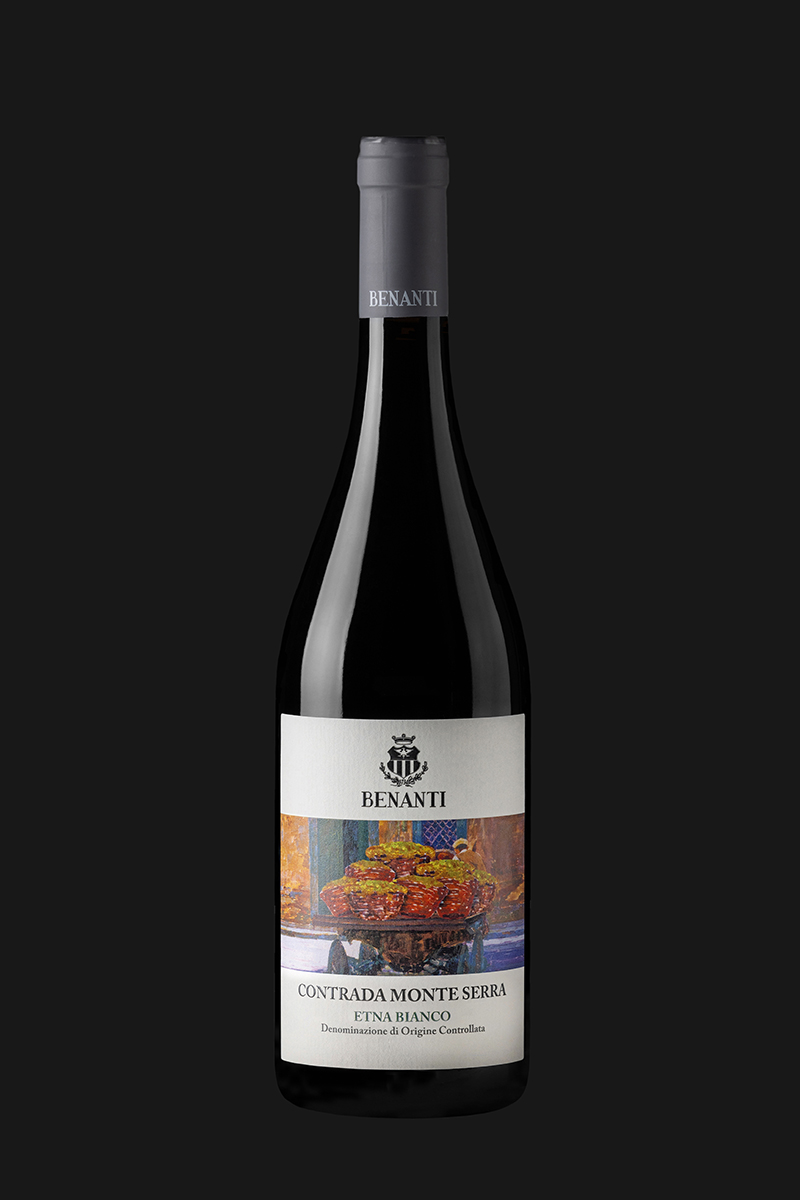
From Contrada Monte Serra on the southeastern slopes of Mount Etna near Viagrande, this 100% Carricante offers a beautifully elegant and slightly rounder interpretation of Etna Bianco. The east-facing alberello vines grow at 450–500 metres on sandy volcanic soils rich in minerals, with the nearby Ionian Sea helping moderate this distinctive site. The 2024 opens with ripe orchard fruit and apple, subtle citrus and delicate floral notes, complemented by a lovely buttery, lees-driven richness. There is more breadth and roundness here than in some of Etna’s more linear expressions of Carricante, yet all the variety’s refreshing and mineral hallmarks remain firmly intact. The palate is polished and finely textured, balancing its slightly creamy presence with vibrant acidity, subtle salinity and persistent volcanic minerality. Any phenolic grip is seamlessly integrated within the wine’s silky texture; rather than tannin, it is the clean mineral tension that ultimately defines the long, precise finish. Matured for 12 months on fine lees in stainless steel with periodic stirring, followed by six months in bottle, this is a wonderfully composed Carricante. Rounder in texture yet never heavy, combining elegance, freshness and persistent mineral character. 94 points.
Alberelli di Giodo Carricante 2023 — 94 points
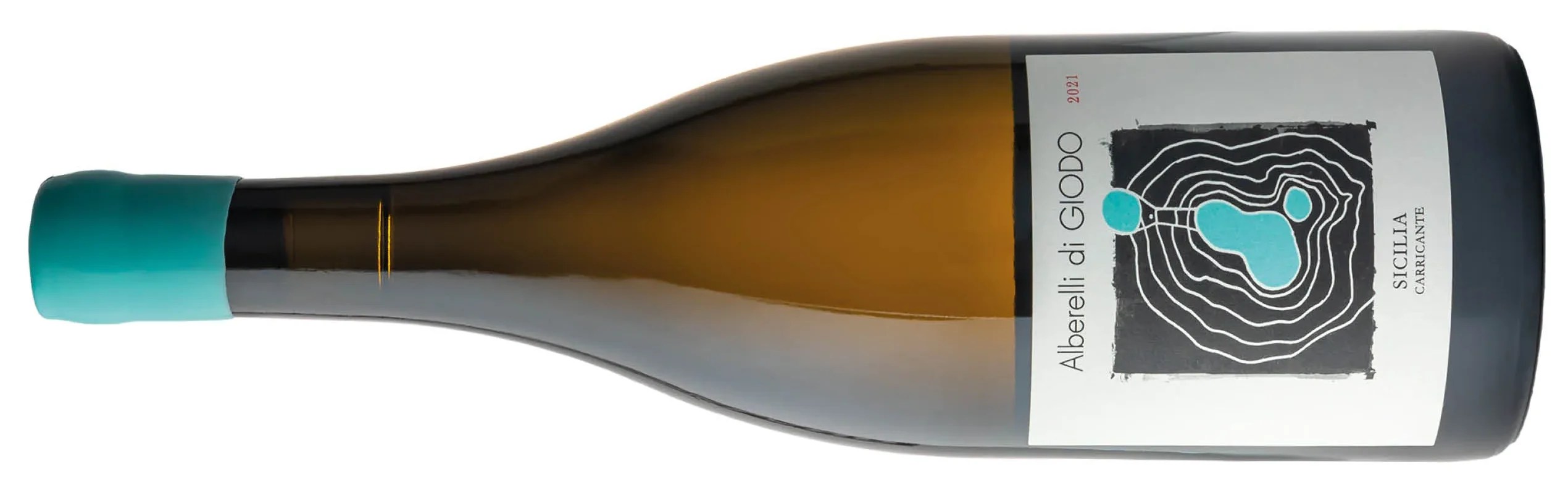
Pale gold and beautifully precise, this was another compelling demonstration of Carricante’s potential. Crisp orchard fruit and apple are carried by remarkable freshness, while a sea-breeze-like salinity introduces a distinctly mineral dimension. The palate is polished and energetic, with citrus accents adding lift before a wonderfully clean, salty finish. There is little ornamentation here. Instead, the wine succeeds through purity, balance and the tension between ripe Sicilian fruit and mineral freshness—the characteristics that make Carricante such an exciting variety to discover. – 94 points.
Cusumano Alta Mora Arrigo Etna Bianco 2023 — 94 points
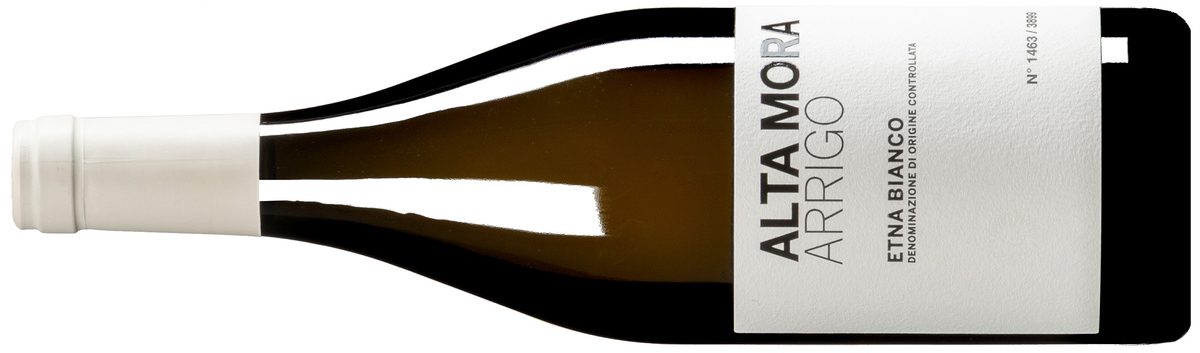
If one white wine illustrated Etna’s climatic paradox particularly well, Arrigo was it. The wine is visibly and aromatically ripe, with golden-yellow colour and generous yellow apple alongside a subtle marzipan-like richness. Yet on the palate that Mediterranean ripeness is countered by remarkable freshness and crushed-rock minerality. Rather than feeling heavy, the wine remains vibrant and energetic. That juxtaposition—ripe fruit and intense sunshine expressed through a wine possessing freshness, precision and mineral tension—is precisely why Etna Bianco deserves greater attention.
Camporè Fumante Contrada San Lorenzo Etna Bianco 2024 — 93+ points
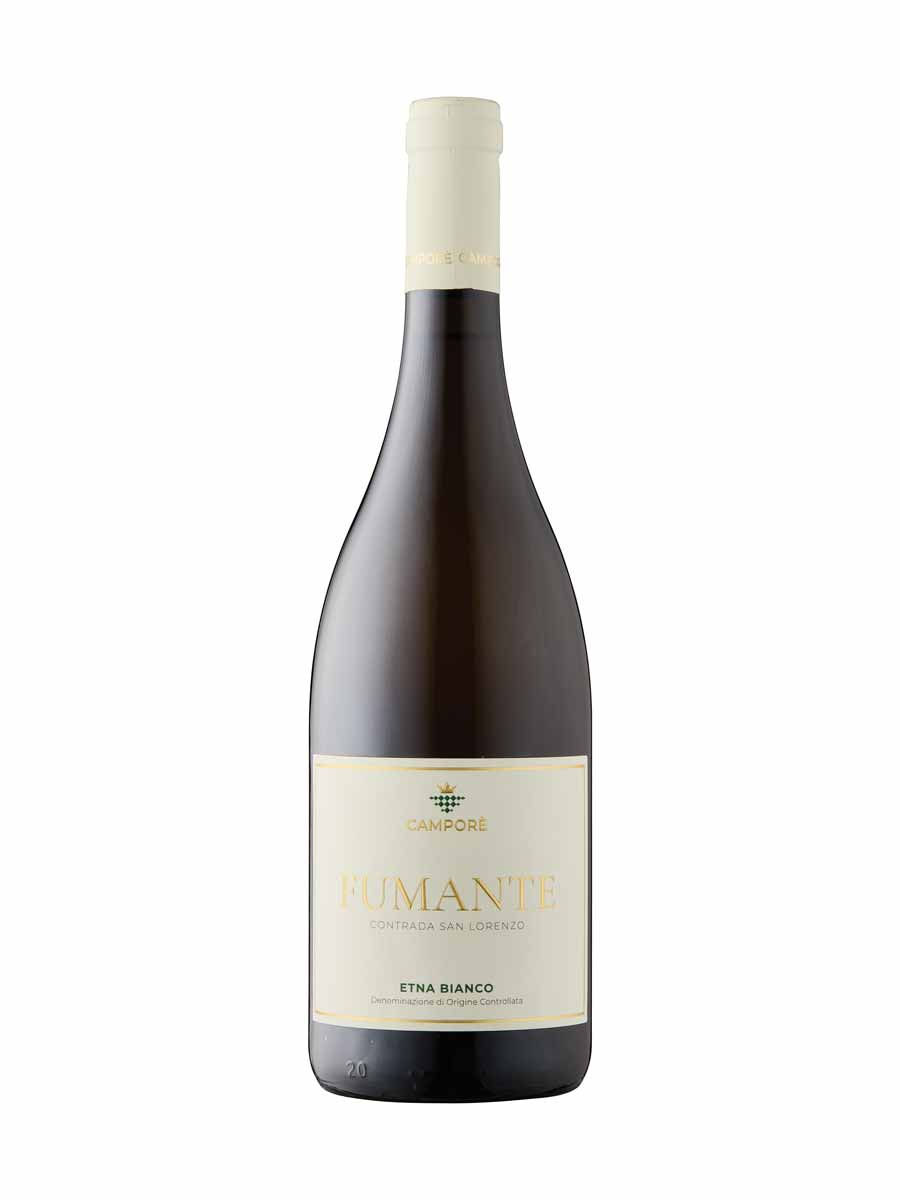
An impressive Etna Bianco from Camporè, a relatively young estate established in 2016 and producing just 65,000 bottles annually across its entire portfolio. Fumante 2024 is a blend of 70% Carricante and 30% Catarratto that beautifully captures the freshness and volcanic energy that make Etna’s white wines so distinctive. Tart citrus leads the way, joined by Mediterranean herbs, flint and pronounced crushed-stone minerality. The palate is wonderfully refreshing yet far from delicate, showing impressive structure, vibrant acidity and fine tannins that add texture and grip. Flinty volcanic notes persist throughout, complementing the citrus fruit and savoury herbal character before carrying onto a long, mineral-driven finish. What impresses most is the wine’s combination of structure and sheer drinkability. There is plenty to contemplate, yet its mouthwatering freshness continually invites another sip. A terrific expression of Carricante and Catarratto from the slopes of Etna. 93+ points.
Twenty years ago, Etna remained something of a specialist discovery. Since then, the number of exceptional wines has skyrocketed as growers and producers have increasingly explored the identities of individual contrade, old vineyards and indigenous varieties.
The world is catching on.
For Pinot Noir drinkers, Nerello Mascalese opens another fascinating landscape: beautifully expressive and often remarkably complex, with layered bouquets of red fruit, florals, Mediterranean herbs, spice and volcanic minerality, all delivered with impressive elegance and transparency to terroir.
For lovers of Chardonnay and mineral-driven white wines, Carricante deserves equally serious attention. Its combination of fruit, acidity, salinity, texture and ageing potential places the best examples among Italy’s most exciting white wines.
Availability remains frustratingly limited in markets such as Ontario, where the LCBO may have only a few Etna wines available at any particular time. Hopefully that changes. These wines are simply too good, and too interesting, not to be enjoyed more often.
So when Etna Rosso or Etna Bianco appears on the shelf of your local wine shop, take a closer look.
Look for Nerello Mascalese. Look for Carricante. Look for the name of a contrada. And look for the producers who are demonstrating what can happen when indigenous grapes, ancient lava, Mediterranean sunshine and mountain elevation converge on the slopes of one of the world’s great active volcanoes.
Etna’s wines may be born from fire, but they are defined by freshness.
Cheers,
Matt


Discover more from Quercus Vino
Subscribe to get the latest posts sent to your email.


Amazing report, Matthew. It took me two hours to read it – very informative and interesting. Who would have thought that high-quality grapes could be grown